
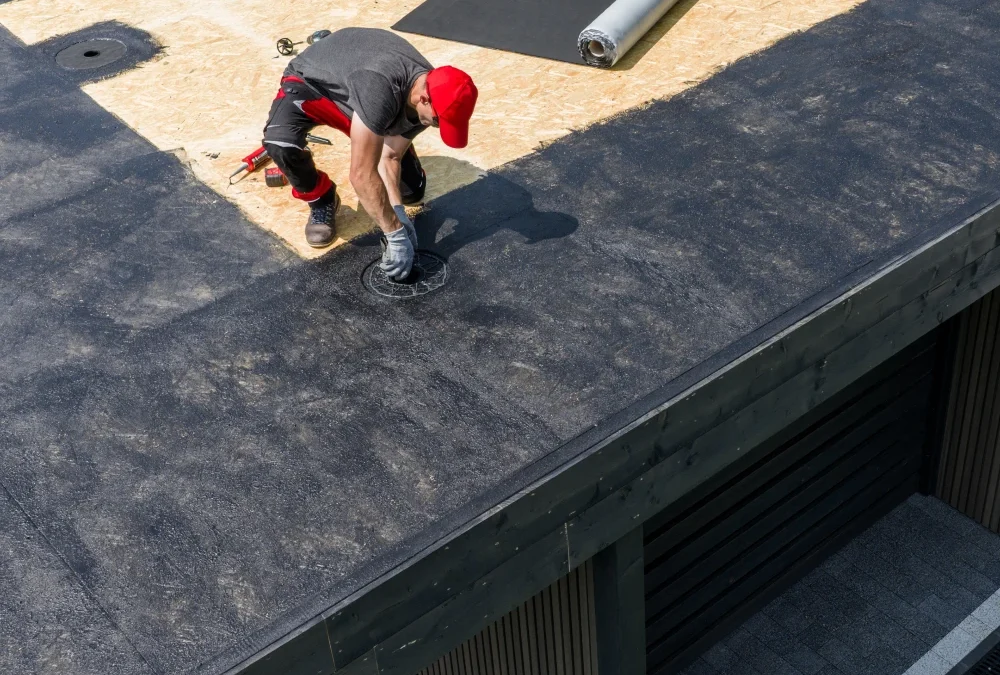
Flat roofs have something of an unfair reputation among homeowners. Mention one to a friend and you’ll often get a knowing grimace and a comment about leaks or short lifespans. The reality, as we’ve seen across hundreds of jobs in South West London, is that a properly installed and well-maintained flat roof performs reliably for many years. The problems tend to arise when they’re installed on the cheap, or when the early signs of wear are ignored until the damage becomes significant.
Given how many rear extensions, bay window coverings, garage roofs, and outbuilding structures across London rely on flat roofs, it’s worth understanding what you’re dealing with and what good repair looks like.
Understanding the Different Types of Flat Roof
Not all flat roofs are the same, and understanding the system on your property makes a difference when it comes to diagnosis and repair. Older properties in South West London are frequently found with traditional felt flat roofs, which typically consist of layers of bitumen felt bonded together. These systems have been around for decades and, when properly maintained, can perform well but they do have a finite lifespan and are susceptible to blistering, cracking, and delamination as they age.
EPDM rubber roofing has become increasingly popular in recent years, and for good reason. It’s durable, lightweight, and resistant to UV degradation in a way that felt systems simply aren’t. A properly installed EPDM roof can last 25 years or more with minimal maintenance.
GRP (glass-reinforced plastic) fibreglass roofing is another modern option that’s grown significantly in popularity. It creates a seamless, waterproof surface that handles ponding water well and is highly resistant to cracking. We’ve carried out a large number of GRP installations and repairs across the area and consistently find it to be one of the most reliable systems available for domestic flat roof applications.
Common Flat Roof Problems and What Causes Them
The most frequent issue we encounter with flat roofs is water ponding, standing water that collects on the surface due to inadequate drainage or a slight deflection in the roof deck. On its own, a small amount of temporary ponding isn’t necessarily catastrophic, but persistent standing water accelerates the deterioration of the waterproofing membrane and adds unnecessary load to the structure beneath.
Blistering is another telltale sign of a flat roof that needs attention. Blisters form when air or moisture becomes trapped beneath the surface membrane and then expands in warm weather. Left untreated, blisters become weak points where the membrane can crack and allow water ingress, often without any visible external signs until the damage has already reached the structure below.
Flashing failures at the edges of flat roofs are also very common. The junction between the flat roof covering and any adjacent vertical surface, a parapet wall, a door threshold, a chimney, needs to be properly sealed with compatible flashing. When this seal fails, it can allow water to track along the junction and enter the building at a point that’s difficult to identify without a thorough roof inspection.
Repair vs. Replacement: When Is It Time to Start Fresh?
This is the question we get asked most often about flat roofs, and the honest answer depends on the age of the system, the extent of the existing damage, and whether the underlying structure is sound. A relatively new flat roof with isolated damage is almost always worth repairing, it’s cost-effective and can extend the functional life of the system significantly. An older system that’s near the end of its expected lifespan, or one where damage is widespread, is often better replaced in its entirety.
We always give homeowners an honest assessment of which route makes more financial sense. There’s no value in us patching a roof that’s going to need full replacement in twelve months, that’s a waste of your money and an inconvenience to everyone involved.
Maintaining a Flat Roof
The single best thing a flat roof owner can do is keep the drainage clear and carry out a visual check once or twice a year, ideally after any significant weather event. Clearing debris from drainage outlets and checking for obvious signs of surface damage takes very little time but can catch developing problems before they escalate.
Our roofing repairs team covers flat roof repairs and replacements across South West London. If your flat roof is showing any signs of wear, don’t wait until the water starts coming through, a free inspection now costs nothing and could save you a great deal further down the line.