
Gutter repairs and gutter replacements are not the same thing, and knowing which one your property actually needs can save you either money or a lot of frustration. A good repair made at the right time extends the life of a system by years. The same repair applied to a system that’s already failing is money spent on borrowed time, and that borrowed time can be expensive if the underlying deterioration continues unchecked.
The tricky part is that most homeowners don’t spend much time looking closely at their gutters. They’re up high, they’re easy to ignore when things seem fine, and it’s only when water starts appearing somewhere it shouldn’t that the inspection ladder comes out. By that point, the question of repair versus replacement often answers itself. Catching the warning signs earlier, before secondary damage to the fascia, walls, or interior has occurred, nearly always produces a better outcome.
How Age Affects Your Guttering
Age alone is a reasonable indicator of where a system sits in its lifecycle. UPVC guttering has a typical lifespan of 25 to 30 years in UK conditions. Cast iron, properly maintained, lasts far longer, but without regular painting and inspection, the joints corrode and the sections crack. If your current system was installed during the 1990s and hasn’t been touched since, it’s reasonable to assume it’s approaching the end of its useful life regardless of whether any visible problems have appeared yet.
This matters because a system that’s near the end of its life doesn’t need to have obviously failed before replacement makes sense. If you’re already having work done on the fascia, the roof, or the exterior of the property, the additional cost of replacing an ageing gutter system at the same time is almost always lower than returning separately to do it in two or three years when it finally gives out entirely.
Multiple Failing Joints: A Pattern Worth Acting On
Multiple failing joints along a single run are almost always a sign that replacement is the better call. Each joint in a UPVC system relies on a rubber seal to stay watertight. Those seals age and harden at roughly the same rate throughout the entire system, because they were installed at the same time and have been exposed to the same weather conditions. When one starts to fail, the others are usually close behind, which means resealing one joint at a time can quickly become a cycle of small repairs that collectively cost more than a clean replacement would have.
If you’ve had more than two or three joint repairs on the same system over the course of a few years, that’s a meaningful signal. A professional inspection at that point will usually confirm what the pattern already suggests.
Sagging and Misalignment
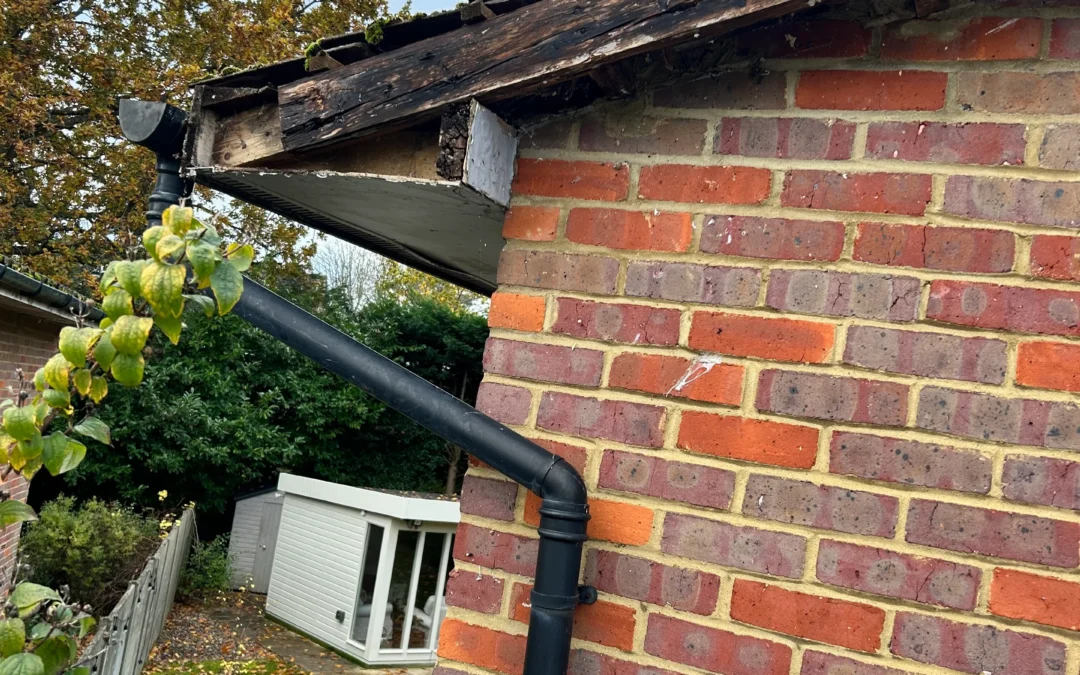
Visible sagging or misalignment is another clear red flag. Gutters sag when the brackets fail, either because the fixings have pulled out of a softening fascia or because the bracket itself has corroded or cracked. Rehinging a sagging section is possible, but if the fascia behind it is already compromised, you’re fixing the symptom rather than the cause, and the new fixing will pull out just as surely as the old one did.
Our team at Will Fix It regularly arrives expecting a simple bracket job and discovers that the fascia board behind the gutter is soft enough to push a finger through. At that point, a like-for-like repair isn’t really a repair at all. It’s a temporary measure that defers the inevitable while potentially allowing the water ingress to continue and worsen.
Persistent Wall Staining After Cleaning
Persistent staining on exterior walls, even after the gutters have been thoroughly cleaned, suggests the system has been overflowing regularly enough to leave a residual mark in the brickwork or render. That staining doesn’t form in an afternoon. It takes repeated soaking and drying cycles over months or years. By the time it’s clearly visible, there’s usually been enough water against that wall to warrant checking whether moisture has penetrated the brickwork, and replacing the gutter system entirely rather than managing it piecemeal is the correct response.
Worth noting is that some exterior staining persists even after the underlying gutter problem is resolved, because the pigmentation from algae and mineral deposits can sit in the surface of render or masonry. If staining continues to appear fresh or wet-looking rather than historic, the water source hasn’t been fully addressed.
Cracking and Brittleness in UPVC
Cracking and brittleness in UPVC sections is a physical sign that the material has reached the end of its service life. UV exposure and repeated freeze-thaw cycles cause the plastic to become increasingly rigid and fragile over time. You’ll often notice this first at downpipe connections and corners, where the stress on the material is greatest. At this stage, even sections that haven’t visibly cracked are likely to follow, because the brittleness is a property of the whole aged material rather than an isolated defect in one section.
Running your hand along a section of UPVC gutter during a cleaning visit is one of the easiest ways to check. Material that flexes slightly under light pressure is healthy. Material that feels completely rigid and makes a dull sound when tapped has lost its flexibility and is approaching the end of its working life.
When Planned Work Makes Replacement the Smart Choice
Finally, if you’re planning any significant exterior work such as a new roof, a full fascia and soffit replacement, or a rear extension, it almost always makes sense to replace the gutters at the same time. The access and labour are already in place, and combining the jobs is always more cost-effective than treating them separately. Putting new gutters on old fascias, or leaving old gutters on new fascias, creates a mismatched system where the weakest element determines the performance of the whole.
Doing it all together is tidier, more cost-effective, and gives you a roofline you can trust for the next two to three decades without further significant intervention. If you’re unsure whether repair or replacement is the right call for your home, a professional inspection removes the guesswork entirely.
Will Fix It offers free gutter assessments across South West London