
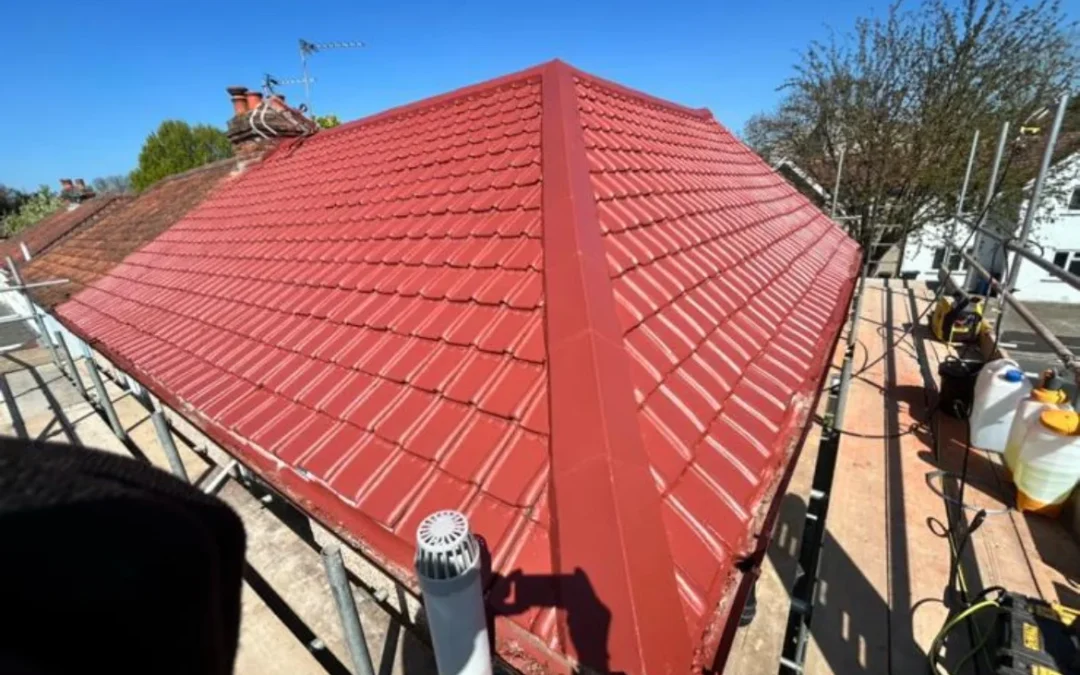
A new roof is a significant investment, and like any significant investment, it rewards attention. The homeowners who get the most years out of their roofs and spend the least money on repairs over time are almost always the ones who do a small amount of maintenance consistently rather than leaving everything to chance and reacting when problems arise. None of this is complicated or expensive. It mostly comes down to a few straightforward habits done regularly.
Gutter Clearing: More Important Than Most People Think
The humble gutter is one of the most important components in your roof’s performance, and it’s the one most commonly neglected. When gutters fill with leaf debris, moss, and general organic matter, water that should be flowing away backs up against the fascia board and, in serious cases, against the bottom courses of the roof covering itself. Over time, this causes fascia rot, damp penetration into the roof structure, and accelerated moss growth on the lower tiles.
Clearing gutters at least twice a year, once in late autumn after the leaves have fallen, and once in early spring is the single most cost-effective maintenance action most homeowners can take. If you have significant trees overhanging the roof, quarterly clearing may be more appropriate. While you’re at it, check that downpipes are running freely and that the outlets aren’t blocked at ground level.
Managing Moss and Algae
Some moss on a UK roof is almost inevitable; the climate simply favours it. The key is preventing it from establishing deeply into the tile surface, where it holds moisture against the tile and gradually degrades the roofing material. Light surface moss on concrete or clay tiles can be treated with a proprietary moss killer applied by a professional, followed by a biocide wash to inhibit regrowth.
What you want to avoid is pressure washing. High-pressure water blasting may remove visible moss quickly, but it damages the tile surface, strips protective coatings, and can break the seal on mortar work. It’s a false economy that shortens tile life significantly, and we always advise against it.
Natural slate is less susceptible to moss than concrete tile because its denser, smoother surface doesn’t provide the same foothold. If your roof is slate, your moss management effort will be considerably less.
Professional Inspections: Worth Doing Properly
We recommend having your roof professionally inspected every five to seven years, and additionally after any significant weather event storm damage, unusual snowfall, or sustained heavy frost. A professional inspection looks at things you can’t assess from the ground or loft alone: the condition of ridge mortar or dry-ridge fixings, the state of lead flashing, the integrity of tile fixings on exposed areas, and the condition of any valley linings.
A full inspection typically costs £150–£300 and takes a couple of hours. If it identifies a £200 repair that, left unattended, would have become a £2,000 structural issue, the value is obvious.
Ventilation and Insulation Checks
Loft ventilation is something most homeowners don’t think about until something goes wrong, but it’s important for the long-term health of the roof structure. Adequate ventilation prevents condensation from forming on the underside of the roof structure condensation that causes timber rot, black mold in the loft space, and degraded insulation. Make sure ventilation tiles or eave ventilation aren’t being blocked by insulation that’s been pushed too far toward the eaves.
If you had new insulation installed at the same time as your re-roof, your contractor should have ensured adequate cross-ventilation was maintained. If your roof is older and you’re adding new insulation, it’s worth having a professional check ventilation adequacy at the same time.
Keeping on top of these maintenance basics is genuinely the difference between a roof that performs for 30+ years and one that needs significant repair work at 15. At Will Fix It Home Improvements, we offer periodic inspection and maintenance services alongside our full re-roofing work. Find out more about our new roof service here.
Click here to see more: The Complete Guide to Getting a New Roof: Everything UK Homeowners Need to Know