
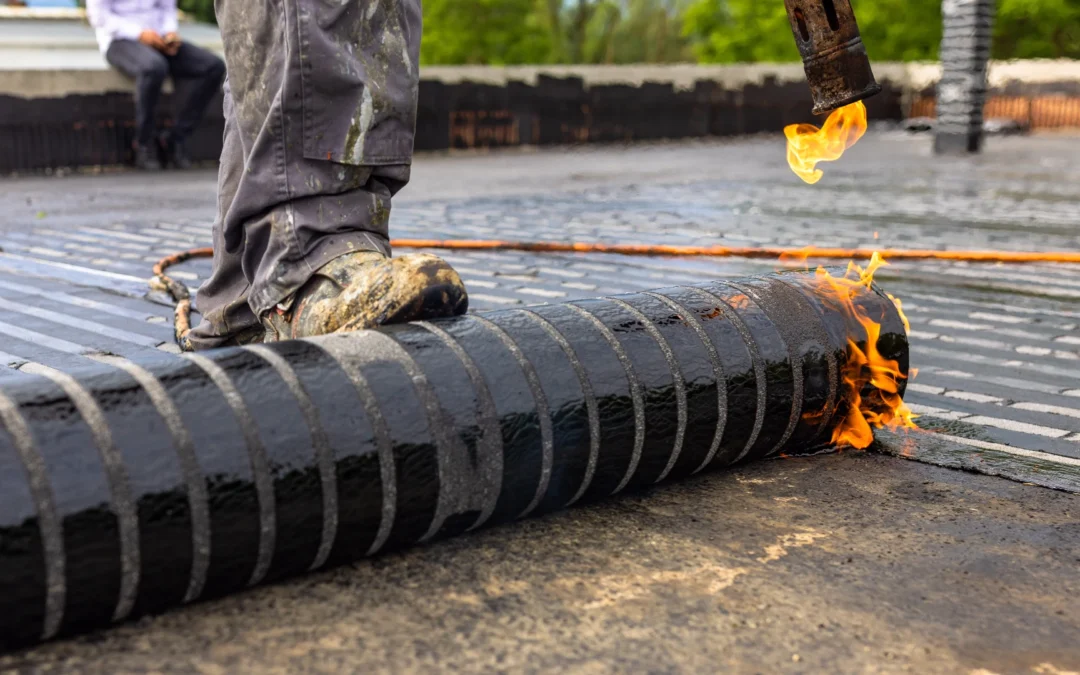
Flat roofs are everywhere in UK residential properties. Extension roofs, garage roofs, bay window flat roofs, porch canopies and outbuildings. They are ubiquitous, and they are the source of more roofing headaches than almost any other construction element in UK homes. Not because flat roofs are inherently bad, but because they are more demanding than pitched roofs and often don’t get the attention they need until something goes wrong.
Roof coatings have become one of the most effective and cost-efficient ways to address flat roof problems before they escalate, and in many cases they transform a leaking liability into a reliable, long-performing asset. This guide covers everything you need to know.
Why Flat Roofs Are More Vulnerable
The fundamental challenge with a flat roof is water management. On a pitched roof, gravity does most of the work. Water falls on the surface and runs off quickly. On a flat roof, drainage relies entirely on the correct installation of falls toward outlets, and those outlets staying clear and functional over time.
As a flat roof ages, the surface material degrades. Felt becomes brittle and cracks. Modified bitumen loses its flexibility. Joints and laps open up. And if the drainage is even slightly impaired, water sits on the surface for extended periods, accelerating the deterioration process. It is a cycle that, left unchecked, shortens the roof’s life considerably.
The UK climate compounds all of this. Persistent rainfall, freeze-thaw cycles in winter, and UV exposure in summer all work on the roof surface simultaneously. The result is that many flat roofs in UK residential properties start showing meaningful wear within ten to fifteen years, sometimes sooner if they were installed to a lower specification.
How a Coating Addresses Flat Roof Problems
A liquid-applied coating seals the entire surface in one continuous membrane, eliminating the joints and laps where traditional flat roofing systems typically fail first. Cracks are sealed, surface porosity is eliminated, and the roof is effectively given a new waterproof layer that performs better than the degraded surface beneath it.
Beyond waterproofing, a roof coating gives the surface back its flexibility through its elastomeric properties. It can expand and contract with temperature changes without cracking, which is exactly what the original roofing material has lost over time.
Which Coating Works Best on Flat Roofs?
For UK flat roofs, silicone is our most frequently recommended coating type at Will Fix It. The reason is straightforward: flat roofs accumulate standing water, and silicone is the only mainstream coating type that performs reliably in prolonged contact with water rather than being degraded by it.
Acrylic coatings work well on flat roofs with excellent drainage and reliable falls, where standing water is genuinely not an issue. Where there is any doubt about drainage consistency, silicone is the safer choice for long-term performance.
Polyurethane comes into the picture when the flat roof is a usable space. Roof terraces, walkable flat roofs, and any surface that sees regular foot traffic benefit from polyurethane’s superior mechanical toughness.
Common Flat Roof Problems a Coating Can Fix
Surface cracking and crazing on aged felt is one of the most common issues we deal with, and it is exactly the kind of problem a coating addresses directly. Blistering, where air or moisture pockets have formed beneath the surface, can often be treated and sealed as part of the coating process. Moss and algae growth is dealt with during surface preparation, and the biocidal properties in many coating systems help prevent regrowth afterwards.
Minor leaks at joints, around upstands, or at pipe penetrations are sealed as part of a thorough application. Homeowners are often surprised at how comprehensively a good coating job addresses multiple problems simultaneously.
What a coating cannot fix is structural damage to the deck beneath the membrane, or advanced water ingress that has saturated the insulation layer. Those require replacement work. But the majority of flat roofs we assess are nowhere near that stage, and a roof coating is the right call.
Maintenance After Coating
Keeping a coated flat roof in good condition is straightforward. Clear drainage outlets regularly, particularly after autumn. Remove any debris that accumulates in low points. Have the roof checked professionally every two to three years. If moss begins to reappear, treat it early before it can establish.
The roofs we’ve coated that have performed best over the years are consistently the ones where the homeowner takes ten minutes twice a year to keep the drainage clear. It sounds almost too simple, but it genuinely is the most impactful thing you can do.
If your flat roof is showing signs of wear, get in touch with Will Fix It today. Our flat roof coating service covers the full process from survey to completion.