
If you’re extending your home, replacing a garage roof, or building from scratch, one of the first structural decisions you’ll face is whether to go flat or pitched. It sounds simple on the surface, but the implications for cost, drainage, insulation, and long-term maintenance are significant. We’ve installed both extensively, and what we find is that the right answer almost always depends on the specific context of your property, not any blanket rule about one being better than the other.
What “Flat” Actually Means in Roofing
First, a small but important clarification: a flat roof isn’t truly flat. Every flat roof has a slight fall typically between 1 and 5 degrees to allow rainwater to drain rather than pool. When people talk about flat roofs, they mean any roof with a pitch below roughly 10–12 degrees, where traditional tiling isn’t practical.
In the UK, flat roofs are most commonly found on extensions, garages, dormer tops, commercial buildings, and some mid-century residential properties. Pitched roofs with a steeper slope allowing for tile or slate are the dominant form for main dwelling roofs across British housing stock, partly for aesthetic reasons and partly because the UK’s rainfall patterns make effective drainage a priority.
The Case for a Pitched Roof
A pitched roof sheds water more effectively by design. The steeper the pitch, the faster rainwater runs off, which means less chance of water sitting anywhere long enough to find a way in. For this reason, pitched roofs with quality tile or slate tend to have longer service lives; a well-laid natural slate roof can last 75–100 years, and even a standard concrete tile roof will typically give 25–40 years before needing attention.
Pitched roofs also offer the potential for usable loft space, which adds real value to a property. If you’re adding a new roof to a main dwelling, a pitched structure will almost always be the preferable option aesthetically, structurally, and from a long-term value perspective.
The main trade-off is cost. A pitched roof requires more materials and more labour than a flat equivalent of the same footprint, and the additional height and complexity can add to both the initial build cost and the scaffold requirements.
The Case for a Flat Roof
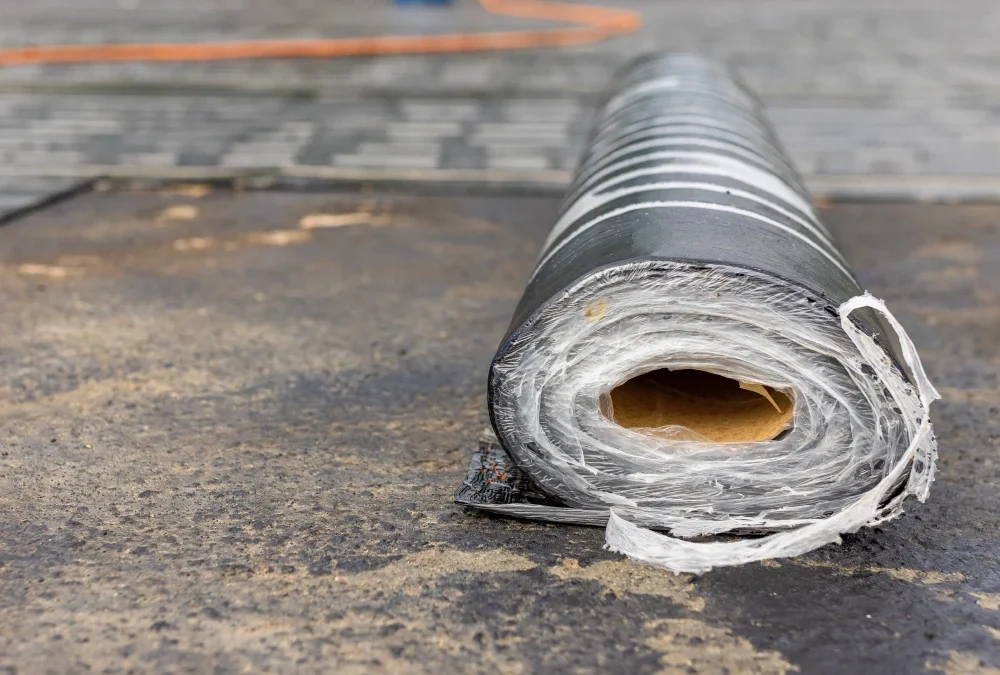
Modern flat roofing systems have come a long way. The bituminous felt flat roofs that were standard in the 1970s and 80s and that gave flat roofs a well-earned reputation for leaking within a decade bear almost no resemblance to what’s available today. EPDM rubber, fibreglass (GRP), and liquid-applied systems now offer warranties of 20–25 years and, when properly installed, perform excellently in the UK climate.
For extensions and garages, a flat roof is often the sensible choice. It’s simpler and faster to construct, sits below the sightlines of a neighbouring property to minimise planning issues, and is easier to access for maintenance. Some modern architectural designs specifically lean into the flat roof aesthetic low-profile, clean-lined extensions that look striking alongside a traditional main dwelling.
The key is choosing the right membrane system for your application and ensuring it’s installed by someone who knows what they’re doing at a reasonable price. Poor installation is the number one cause of flat roof failure; the material itself is rarely the problem.
Which Should You Choose?
For a main house roof, a pitched structure using quality tile or slate is almost always the right recommendation. For a single-storey extension, rear garage, or outbuilding, a flat roof is often the most practical and cost-effective option especially if the design calls for it.
If you’re unsure what’s right for your specific project, a conversation with an experienced roofing contractor is always the best starting point. At Will Fix It Home Improvements, we work with both flat and pitched roofing systems and can advise on the best approach for your property. Find out more about our new roof service here.
Click here to see more: The Complete Guide to Getting a New Roof: Everything UK Homeowners Need to Know