
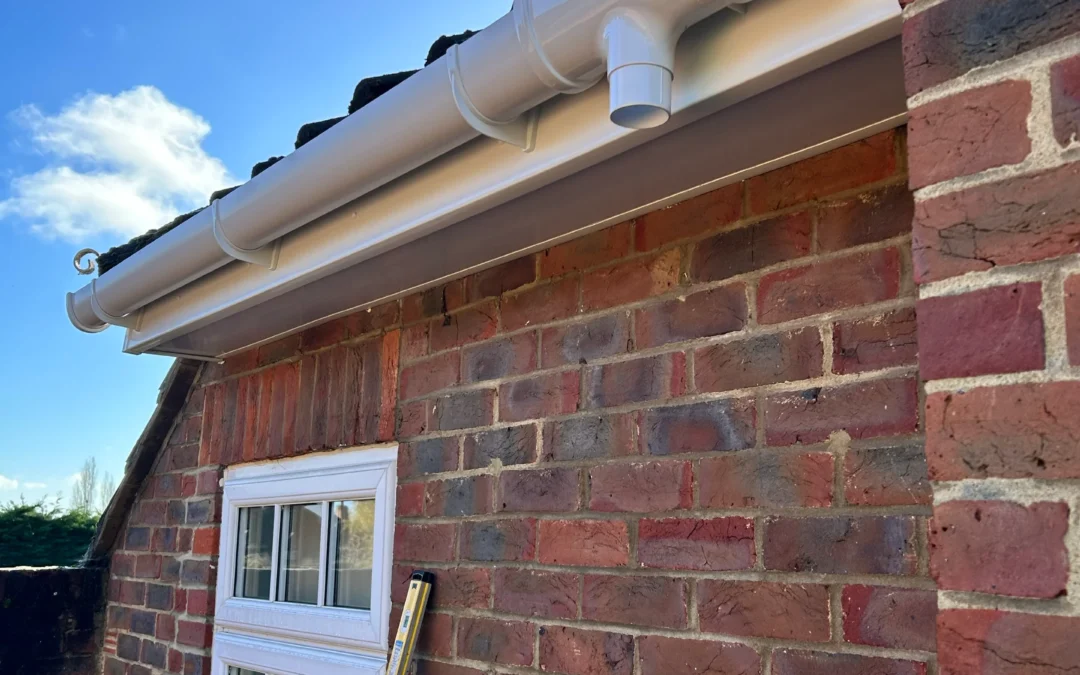
Cost is the first question on most people’s minds when they’re looking at home improvement work, and it’s completely understandable. Fascia and soffit replacement is one of those jobs that covers a wide range, what you pay can vary significantly depending on the size of your property, the materials involved, and the condition of what’s underneath. This post is designed to give you a realistic picture of what to expect.
What’s a Typical Price Range?
As a broad guide for the UK market, a full fascia and soffit replacement on a standard semi-detached property in uPVC typically falls somewhere between £800 and £1,500. For a larger detached property, you might expect to pay between £1,500 and £3,000 or more, depending on the extent of the roofline. Terraced houses at the lower end can come in under £800 if the work is straightforward.
These figures assume a clean installation, removing the old boards and fitting new uPVC in their place, including all associated guttering work. They don’t necessarily account for unexpected repairs, which brings us to the most important variable.
What Can Push the Cost Up?
The single biggest factor that can increase the final cost is the condition of what’s underneath the fascia. When we remove old timber boards, we sometimes find that the rafter feet, the structural timber behind the fascia, have been affected by rot or moisture damage. Repairing or replacing rafter feet before fitting new boards is essential work; installing new fascias on damaged timber is like painting over rust, and we won’t do it. But it does add time and materials to the job.
The complexity of your roofline is another factor. A simple, straight run of eaves on a standard modern house is straightforward to work on. A property with a complicated roofline, multiple returns, valleys, dormers, bay windows, takes longer and requires more careful fitting.
Scaffolding is also worth mentioning. For a safe, professional job, scaffolding is usually required. Some quotes will include this; others won’t. Always clarify whether scaffolding is included in the price you’re given, because it can add several hundred pounds if it isn’t.
Material Choices and Their Impact on Cost
Standard white uPVC is the most affordable material option. Coloured or wood-effect uPVC typically carries a modest premium, perhaps 10 to 20% more than white, but for many properties the aesthetic improvement is well worth it. Timber, depending on the specification, can be comparable to or more expensive than uPVC, with the added long-term cost of maintenance factored in.
It’s also worth noting that the quality of the uPVC itself varies. Cheap boards can look the same on the day they’re fitted but perform very differently over time. We work with quality materials specifically because we’ve seen the difference it makes 10 or 15 years after installation.
Getting a Fair Quote
Always get at least two or three quotes before committing to any roofline work. A good quote will be written, itemised, and clear about what’s included, materials, labour, scaffolding, guttering, and disposal of the old materials. Be cautious of unusually low quotes; they usually mean something is being cut, whether that’s the quality of the materials, the safety setup, or the thoroughness of the preparation.
Don’t be afraid to ask questions. A reputable installer should be happy to explain what their quote includes and why the price is what it is. At Will Fix It Home Improvements, we always take the time to walk customers through what we’ve found and what we’re proposing before a single piece of work is started.
For more information on our services, visit our fascias and soffits service page.