
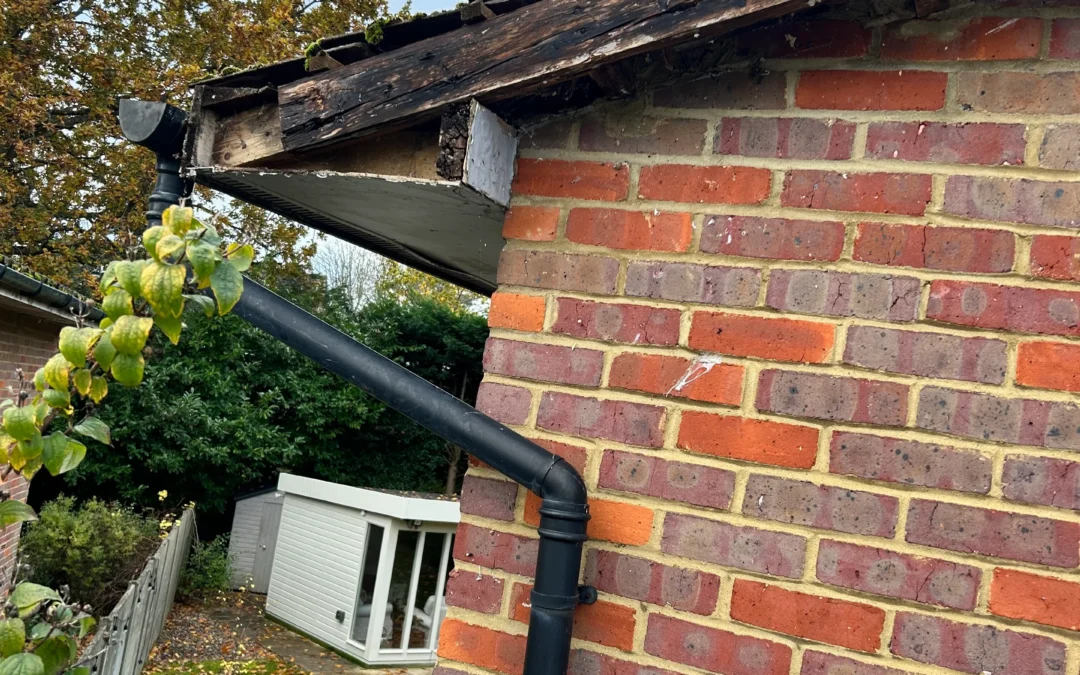
There’s a particular window in the UK domestic calendar, roughly late September through November, when a bit of proactive maintenance on the roofline pays dividends that far outweigh the effort and cost involved. This is when the leaves are coming down, when the first serious autumn storms start rolling in, and when blocked or failing gutters make their presence known most forcefully. Getting ahead of the season rather than reacting to it is almost always the cheaper and less stressful approach.
The good news is that an autumn roofline check doesn’t require a significant investment of time or money. Most of it can be done from ground level in under an hour. The goal is simply to know what state your home is in before the wet season begins, so that anything needing attention can be dealt with while conditions are still reasonable, rather than in the middle of a wet November fortnight when every contractor in the area is suddenly very busy.
Your Ground-Level Visual Inspection
Start from the pavement. Walk around the full perimeter of the property and look at the roofline carefully from several different angles. Are the gutters sitting level and flush, or do any sections appear to have dropped or pulled away from the fascia? Do you notice any sections with visible cracks, gaps at joints, or debris already spilling over the edge? Are the downpipes straight and their connections secure at each storey?
Pay particular attention to any corners or junction points in the gutter run, because these are the areas where debris accumulates most quickly and where joint failures are most common. A sagging section that was barely noticeable in spring may have worsened over a summer of temperature extremes, and catching it now means it can be assessed and fixed before it turns a rainy October evening into a minor crisis.
The Hose Test: Two Minutes Well Spent
The simplest and most informative thing you can do after a visual inspection is run a hose at full pressure into the gutter at the end furthest from the downpipe, or wait for the next decent rainfall and watch the system from outside. Water should flow steadily along the run and drain cleanly into the downpipe without backing up, overflowing, or running down the outside of the pipe at any joint.
Any overflow, pooling, or water running down the wall rather than through the pipe is a clear signal that something needs attention before the season proper begins. A blockage can often be cleared in an afternoon. A failed joint or a misaligned section can be repaired or replaced well within a day on most properties. Identifying these issues in September or October rather than December means you’re choosing when to deal with them rather than being forced to.
Clearing Debris Before the Leaf Fall Peaks
Clear any visible debris from the gutters before the main leaf fall begins in earnest, ideally during the last week of September or the first week of October. This gives you a clean, open channel for the early autumn rainfall before the leaves start coming down in volume. It also means that when the main leaf fall does arrive, it’s going into a clear gutter rather than building on top of an existing mat of compacted debris from the spring and summer.
On properties with heavy tree cover, particularly those with mature plane trees, oaks, or sycamores close to the building, plan a second clear-out in late November or early December once the majority of leaves have fallen. Doing it at this point rather than mid-November means you’re removing the bulk of the season’s debris in a single visit rather than multiple partial clears.
Checking the Roof While You’re At It
While you’re standing back looking at the roofline, it takes very little extra time to cast an eye over the roof itself. You’re not looking for anything subtle, just the obvious things visible from the ground. Missing or slipped tiles, gaps in the ridge line, visible damage to any flat roof sections on rear additions, and loose or missing lead flashing around chimney stacks are all things worth flagging before winter arrives.
A small tile repair made in October is typically a brief, straightforward job for a roofer with available capacity. The same repair left until January, when it’s been allowing water in through several months of wet weather and the contractor’s diary is full of emergency call-outs, becomes a more complicated conversation. Spotting it now costs you nothing. Acting on it promptly costs considerably less than acting later.
Don’t Forget the Ground-Level Drainage
The gulleys and ground-level drains that collect water from the downpipes are easy to overlook during a roofline check, but they’re worth testing as part of the same autumn inspection. Pour a full bucket of water down each downpipe in turn and watch what happens at the base. The water should drain freely and cleanly into the gulley without backing up or pooling at the foot of the pipe.
A blocked gulley can cause water to back up into the base of the downpipe and, in persistent rainfall, overflow at ground level against the building’s foundations. On older properties with shallow or partially collapsed underground drainage, this is more common than most homeowners realise, and the consequences of repeated foundation wetting are far more serious than a blocked gutter. Testing each downpipe takes five minutes and gives you confidence that the full drainage path from roof to ground is clear.
What to Do If You Find a Problem
If your inspection reveals something that needs professional attention, whether it’s a failing joint, a sagging section, a cracked downpipe, or a soffit that’s beginning to show signs of deterioration, acting before the busy season starts in earnest is the practical choice. Contractors in South West London tend to be more available and less stretched in September and October than they are from November onwards, when reactive call-outs for storm damage and blocked gutters begin to fill diaries quickly.
At Will Fix It, we see a predictable surge in gutter-related call-outs every November and December from South West London homeowners whose systems have been struggling silently since the summer. Most of those jobs, and the damp they’ve caused, could have been avoided with a straightforward autumn check a few weeks earlier. Booking a professional inspection in September or October costs very little and removes the uncertainty entirely. You’ll know exactly what state the system is in and what, if anything, needs to be done before the season gets underway.