
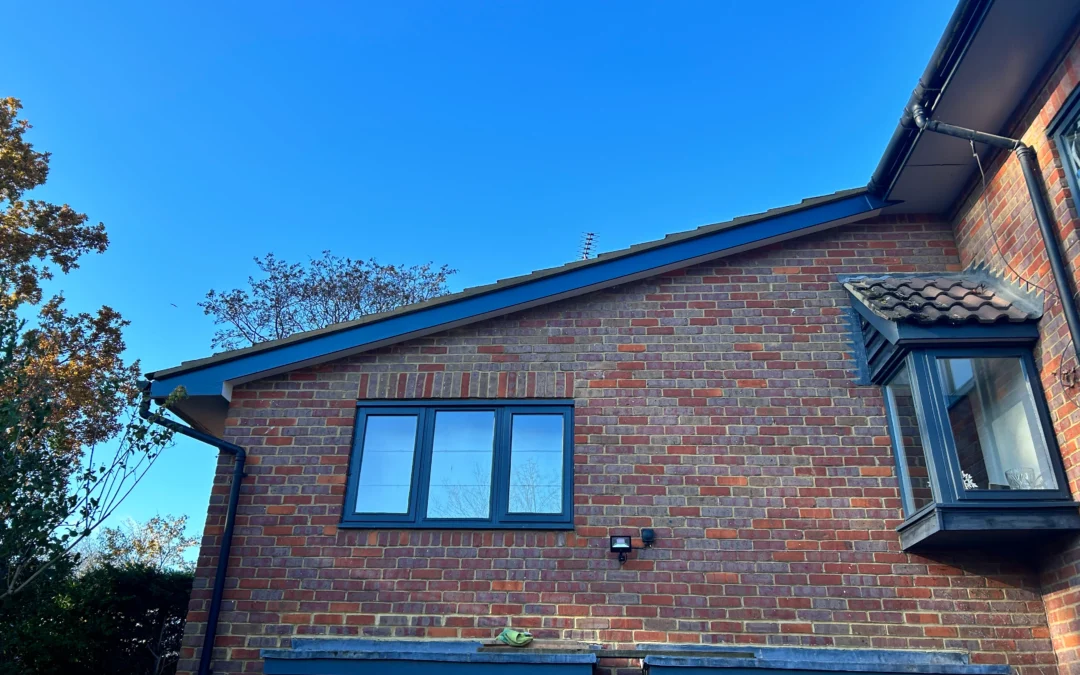
If you’ve ever stood back and looked at the edge of your roofline, chances are you’ve glanced right over two of the most hardworking parts of your home without even realising it. Fascias and soffits aren’t glamorous. They don’t get talked about at dinner parties. But when they start to fail, they’ll make themselves very well known, usually in the form of damp patches, rotting timber, or a gutter hanging off the side of your house in the middle of January.
Over the years, we’ve worked on hundreds of properties across the UK, and fascia and soffit replacement is one of the most common jobs we’re called out for. The sad truth is that most homeowners only pick up the phone when the damage is already visible, and by that point, what could have been a straightforward replacement has often turned into something far more involved. This guide is designed to change that. Whether you’re wondering what fascias and soffits actually are, trying to figure out if yours need replacing, or just want to understand what a professional installation involves, you’ll find the answers here.
What Are Fascias and Soffits?
The fascia is the long, vertical board that runs along the lower edge of your roof, sitting just behind your guttering. It’s what the guttering is actually fixed to, which means it carries a surprising amount of weight, both literally and structurally. The soffit is the horizontal board that sits underneath the fascia, filling the gap between the wall of your house and the outer edge of the roof. Together, they seal off the eaves of your property, keeping out moisture, pests, and the cold.
It sounds simple enough, but there’s more going on than most people realise. The soffit also plays a key role in roof ventilation, many soffit boards are either perforated or fitted with ventilation slots that allow air to circulate through the loft space. Without this, warm, moist air has nowhere to escape, and condensation builds up inside your roof. That leads to mould, rot, and in serious cases, structural damage to the rafters.
Why They Matter More Than You Might Think
We’ve visited properties where the fascias and soffits were completely ignored for 20 or 30 years, and the knock-on effects were significant. Water had crept in behind cracked wooden boards, the roof timbers were soft with rot, and the guttering, unsupported by a rotten fascia, had pulled away from the property entirely. The repair bill in those cases was eye-watering, and it all could have been avoided with timely maintenance.
Healthy fascias and soffits protect your roof structure from the elements. They stop birds and squirrels nesting in the eaves, prevent dampness from seeping through to the loft, and ensure your gutters are properly supported so rainwater is channelled away from your foundations. Given how much rainfall the UK sees throughout the year, that last point is particularly important.
The Most Common Materials: Wood vs uPVC
For most of the 20th century, timber was the standard material for fascias and soffits. It looks good, it’s traditional, and on older properties it can be the right aesthetic choice. The problem is that wood needs regular maintenance, painting, sealing, and treating, to keep it in good condition. When that upkeep slips, it absorbs moisture, swells, cracks, and rots. Most of the damaged rooflines we’re called out to replace are original timber installations that simply weren’t kept on top of.
uPVC has become the dominant choice in modern installations for good reason. It doesn’t rot, it doesn’t need painting, and it comes in a wide range of colours and finishes, including wood-effect options that give you the look of timber without the maintenance headaches. It’s also considerably more affordable over the long term. That said, it’s worth noting that not every property suits uPVC, particularly listed buildings or those in conservation areas, where planning restrictions may apply.
Signs Your Fascias and Soffits Need Replacing
One of the most common questions we get asked is how homeowners can tell when it’s time to replace their fascias and soffits. The honest answer is that you shouldn’t wait until something is visibly falling apart. Regular visual checks, ideally twice a year, spring and autumn, can catch problems early and save you a great deal of money.
That said, here are the most common warning signs to look for. If you spot soft, spongy, or discoloured timber on the fascia board, that’s a strong indicator of rot. Peeling or flaking paint, especially if it keeps coming back no matter how many times you repaint, suggests moisture is getting in from behind. Visible gaps between boards, particularly at the joints, allow water to work its way in and should be addressed promptly. Gutters that are pulling away from the fascia, or sitting at an angle rather than running level, usually mean the fascia behind them is no longer solid enough to hold them in place. And if you’ve noticed an increase in birds, insects, or rodents in your roof space, it’s worth checking whether they’re getting in through a deteriorating soffit.
What Does Fascia and Soffit Replacement Involve?
A professional installation generally follows a clear sequence. First, the old guttering is removed and set aside (or replaced, depending on its condition). The existing fascia and soffit boards are taken off, on timber installations, this sometimes reveals damage to the rafter feet underneath that needs addressing before new boards go on. Once any underlying issues are resolved, the new uPVC or timber boards are measured, cut, and fitted, and the guttering is reinstalled and adjusted for the correct fall.
The job can usually be completed in one to two days for a standard semi-detached or detached property, though larger or more complex rooflines will naturally take longer. Scaffolding is typically required for a safe and thorough installation, anything else, in our experience, leads to corners being cut. We’ve seen plenty of rushed jobs where boards were fitted without adequate support or where the guttering alignment wasn’t properly checked, and those properties end up back on our list within a few years. A quality installation done right the first time is always the better investment.
How Much Does It Cost to Replace Fascias and Soffits in the UK?
Cost is understandably one of the first questions people ask, and the honest answer is that it varies quite a bit depending on the size of your property, the materials you choose, whether any underlying damage needs repairing, and the region of the country you’re in. As a rough guide, a standard semi-detached home might cost anywhere between £800 and £1,500 for a full fascia and soffit replacement in uPVC, while larger detached properties can run considerably higher.
It’s always worth getting at least two or three quotes, and being wary of any price that seems significantly lower than the others, that gap usually means something is being skipped. A reputable installer will survey the property properly, give you a written quote that breaks down the work involved, and offer some form of guarantee on both the materials and the labour. At Will Fix It Home Improvements, we’re always happy to talk through what’s involved before committing to anything.
Choosing the Right Installer
Not all roofline installers are created equal, and the quality of the finish really does come down to the care and experience of the person fitting it. Ask whether they’re registered with any trade bodies, check their reviews on Google and Checkatrade, and make sure they have appropriate public liability insurance. Always ask for a written quote rather than a verbal one, and clarify what’s included, particularly whether scaffolding, guttering, and disposal of the old materials are factored in.
We’ve been doing this for years, and we can say with confidence that the biggest differentiator between a good job and a bad one is preparation. The number of times we’ve arrived at a property to correct someone else’s work because they didn’t check the rafter feet, didn’t use the right fixings, or simply rushed through the job, is more than we’d like. Take the time to choose well, and you won’t have to think about your fascias and soffits again for 25 to 30 years.
Maintenance Tips to Extend the Life of Your Roofline
Even uPVC fascias and soffits benefit from occasional attention. An annual clean with warm soapy water and a soft cloth keeps them looking fresh and lets you spot any cracking, discolouration, or joint separation before it becomes a problem. Keep an eye on your gutters too, blocked gutters overflow, and that overflow often runs down behind the fascia, accelerating any deterioration. Trim any overhanging branches that deposit leaves into the guttering, and check that the downpipes are flowing freely after heavy rain.
For timber boards, the maintenance commitment is higher. They should be checked and repainted every three to five years at a minimum, and any splits or cracks should be filled and sealed as soon as they appear. Small repairs done promptly can extend the life of timber fascias significantly, it’s only when problems are left that the rot sets in. [internal link: How to Maintain Your Fascias, Soffits, and Guttering Year-Round]
Ready to Get Started?
If you’re concerned about the condition of your fascias and soffits, or simply want a professional eye to take a look, we’re always happy to help. Our team covers [service area] and offers free, no-obligation surveys so you can make an informed decision without any pressure. Visit our fascias and soffits service page for more information, or get in touch directly to arrange a visit.