
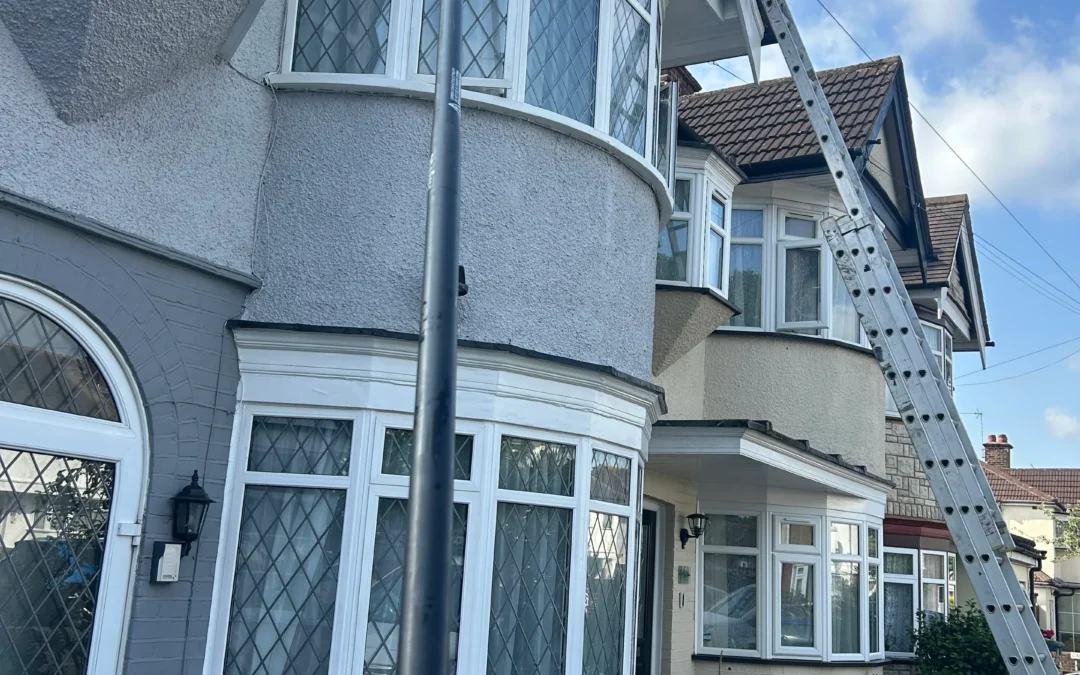
The type of wall coating that performs best on your property depends heavily on what your walls are actually made of and how they’re currently constructed. It’s a detail that gets surprisingly little attention in general guides to wall coatings, but it’s one of the most important factors in getting a result that lasts. Applying the wrong product to the wrong surface, or skipping the preparation steps that a particular surface type demands, is one of the most consistent causes of coating failures we see when homeowners ask us to assess work done by others.
UK housing stock covers a huge range of construction types. Victorian brick terraces, 1930s rendered semis, 1960s pebbledash estates, modern cavity wall construction — each requires a different approach. Here’s a practical guide to what works on each.
Coatings for Brick Walls
Exposed brick is a traditional finish for a significant portion of UK housing and it’s fully compatible with wall coatings, though the approach varies depending on the condition and age of the brickwork. For brickwork that’s structurally sound but showing signs of surface erosion, weathering, or general porosity, an acrylic or silicone system applied over a consolidating primer performs very well.
The key consideration with brick is mortar joint condition. Open, cracked, or crumbling mortar joints are the primary entry point for water in brick walls, and they need to be raked out and repointed before any coating is applied. Coating over compromised mortar joints without addressing them first is a shortcut that produces a short-lived result. Done properly, a coated brick elevation sheds water effectively and requires no further attention for well over a decade.
Silicone systems are our preferred specification on brick because the breathability they offer suits the natural moisture dynamics of brick construction. Brick absorbs and releases moisture as part of its normal behaviour, and a breathable coating works with that rather than against it.
Coatings for Rendered Walls
Sand and cement render is one of the most common exterior finishes on UK properties built from the 1930s onwards, and it responds very well to wall coatings across the full range of product types. The smooth surface provides good adhesion, and provided the render is sound and well bonded to the substrate behind it, the coating process is straightforward.
The most important check on a rendered wall is soundness. Render that has lost its bond with the underlying blockwork or brickwork will sound hollow when tapped, and areas like this need to be cut out and reinstated before coating. Applying a coating over hollow render traps the problem rather than solving it, and the area will eventually fail regardless of what’s on the surface.
For rendered properties dealing with hairline cracking across the face of the render, which is extremely common as render ages and the structure beneath it moves slightly with seasonal temperature changes, an elastomeric coating is often the best specification. The flexibility built into these systems keeps the coating intact over the small movements that cause standard rigid coatings to crack along the same lines as the substrate beneath.
For a full explanation of elastomeric and other coating types, read our guide on the different types of exterior wall coatings
Coatings for Pebbledash
Pebbledash is arguably the surface type that benefits most dramatically from a wall coating, both practically and aesthetically. It’s enormously common across UK housing stock, particularly properties built between the 1920s and 1960s, and it’s widely regarded as one of the less appealing exterior finishes to live with. Repainting pebbledash neatly is difficult, time-consuming, and produces results that rarely look truly finished.
A textured coating applied over properly prepared pebbledash solves the aesthetic problem completely while simultaneously delivering all of the protective benefits of a full wall coating system. The texture of the coating works with the surface profile of the pebbledash, the result looks intentional and well-finished, and the homeowner is left with an exterior that looks dramatically better and performs dramatically better than what was there before.
Preparation on pebbledash requires attention to any areas where the original dash has become loose or is missing entirely. These areas need to be repaired before coating. Biological growth is also particularly common on pebbledash because the uneven surface holds moisture, so thorough cleaning and biocide treatment are standard parts of the process.
Coatings for Concrete Block and Modern Construction
Modern properties built from cavity blockwork rather than traditional brick and render can also be coated effectively. The smooth or textured face of modern blockwork is a good substrate for acrylic and silicone systems, and the results on a newer property tend to be particularly clean and uniform because the surface is more consistent.
One consideration on modern construction is the importance of checking that the building has completed its initial settlement period. New buildings move as the structure settles, and applying a coating to a property that’s still in its first year or two of movement is a risk. For properties more than three years old, settlement is generally complete enough to proceed.
Coatings for Older Stone Properties
This is where we give the most cautious advice, and rightly so. Traditional stone construction, particularly the natural limestone, sandstone, and granite used in older UK properties, is inherently breathable. The moisture dynamics of a stone building are different from a modern cavity wall, and applying a non-breathable coating to stone can trap moisture inside the wall with damaging consequences.
For stone properties, if a coating is appropriate at all, it must be a highly breathable system, often a specialist lime-compatible product rather than a standard residential wall coating. In some cases, the right advice is that no coating should be applied at all. Any reputable contractor will be transparent about this during the survey stage, even if it means recommending against a product sale.
To understand how breathability works in wall coatings and why it matters, read our post on wall coatings and damp prevention.
Getting the Right Specification for Your Property
The practical takeaway from all of this is that surface type genuinely matters, and the first step in getting it right is a survey carried out by someone who understands what they’re looking at. The survey is where surface type is confirmed, condition is assessed, and the right product is specified.
At Will Fix It Home Improvements, every job starts with a thorough survey at no charge. We assess your specific surface type, identify any preparation requirements, and recommend the coating system that will perform best on your property. Visit our wall coatings service page to find out more or book your free survey.