
External wall damp is one of the more alarming things a homeowner can discover, partly because it’s visible and concerning, and partly because the list of possible causes is long enough that diagnosing the actual source can feel genuinely overwhelming. In practice, though, a significant proportion of external wall damp cases in older UK properties trace back to the roofline, and specifically to gutters that are overflowing, leaking at the joints, or discharging water onto the wall rather than into the downpipe.
Getting to the root cause quickly matters, because treating the symptom without fixing the source is both expensive and ineffective. This guide works through the most common causes of external wall damp, with a particular focus on how to tell whether your gutters are the culprit.
Why Gutters Are So Often the Cause
The mechanism by which gutters cause wall damp is straightforward. Water that misses the gutter, overflows from a blocked channel, or escapes from a failed joint runs down the face of the building rather than being captured and directed into the downpipe system. On modern cavity wall construction, the outer leaf of brickwork handles moderate wetting reasonably well. The cavity provides a degree of protection and allows the outer wall to dry out between rainfall events.
On older solid-wall properties, however, and Victorian and Edwardian terraces make up a very large proportion of South West London’s housing stock, prolonged or repeated wetting of the brickwork allows moisture to travel through the full wall thickness and appear as damp patches on the internal plaster surface. The older the property and the more porous the original brickwork, the more pronounced this effect tends to be.
How to Tell If Gutters Are the Source
The location and appearance of the damp is usually the most reliable diagnostic indicator. Damp patches that appear specifically in the upper section of the wall, beneath the roofline, and particularly directly below a gutter run or at the corner where two sections meet, strongly suggest overflowing water as the source. Vertical streaking on the exterior wall below a downpipe connection points to a leaking joint at that connection. Green or black algae growth in a horizontal band below the gutter level is almost always caused by the regular wetting of repeated overflow events.
Inside the property, damp appearing on the upper section of a top-floor wall or on the ceiling close to the eaves line is often traceable to the roofline rather than the roof itself. Many homeowners and even some contractors assume this kind of damp is a roofing problem, a slipped tile, failed flashing, or penetrated felt, and spend money on roof repairs that don’t resolve the issue because the source was the gutter all along.
Gutter Damp vs Rising Damp: Knowing the Difference
Rising damp presents very differently to roofline-related damp, and distinguishing between the two saves considerable time and money. Rising damp appears as a tide-mark of moisture on the lower section of internal walls, typically no more than one metre above floor level. It’s often accompanied by salt crystallisation on the plaster surface, a phenomenon called efflorescence, which appears as a white powdery deposit as the salts carried by groundwater are deposited when the water evaporates.
Roofline-related damp appears at the top of the wall, close to the ceiling on the upper floor or on the ceiling itself. It may also appear on the upper section of an external wall as a damp stain or a patch of peeling paint, particularly after heavy rainfall. The two conditions sit at opposite ends of the wall, and while it’s possible to have both simultaneously, distinguishing between them is usually straightforward when you know what to look for.
Other Roofline Sources of Wall Damp
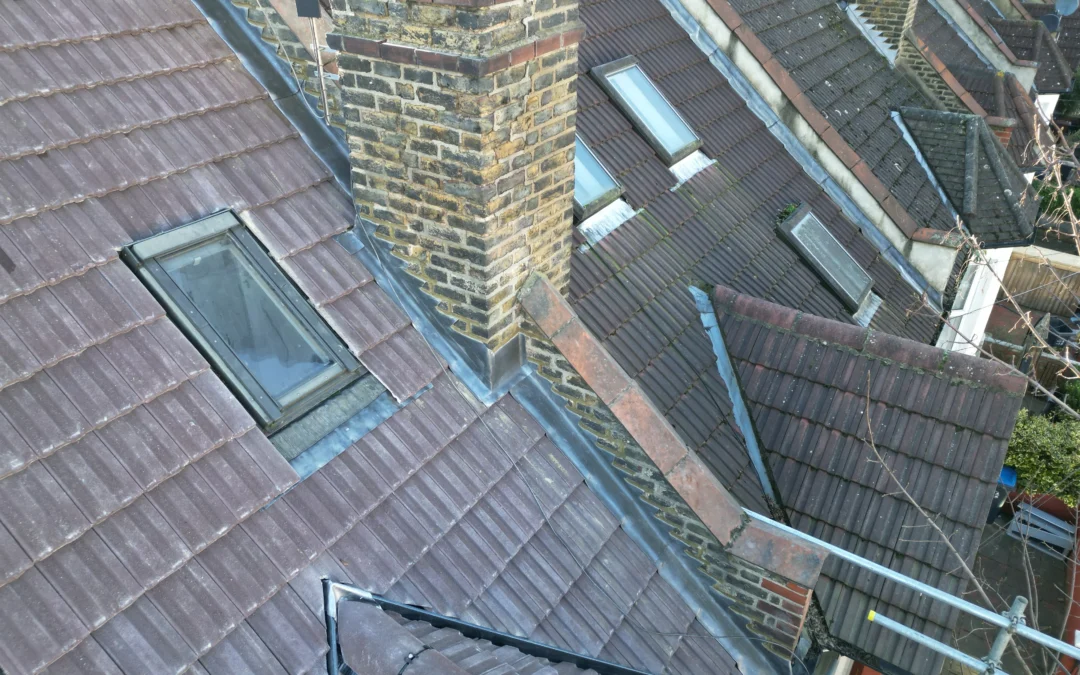
Gutters are not the only roofline feature that can cause wall damp, and a thorough diagnosis should consider the full picture. Blocked or absent lead flashings around chimney stacks and roof penetrations can allow water to track down the inside of the external wall. Failed pointing on a parapet wall or a chimney breast creates an entry point for rainwater that presents remarkably similarly to gutter overflow on the wall below. Valley gutters at the point where two roof pitches meet can overflow when blocked, sending water down the inside of the roof structure.
The age and condition of the roof covering itself is always worth checking. A few missing or slipped tiles above the affected area of wall should not be dismissed, even if the gutter explanation seems compelling. In most cases, a methodical approach that works down from the top, checking the roof first, then the flashings, then the gutters, then the pointing, gives the clearest overall picture.
Fix the Source, Not Just the Symptom
The most common and most frustrating mistake we see when called out to investigate damp on external walls is the situation where a previous owner or contractor has applied an external waterproofing treatment to the brickwork without addressing the underlying cause. These treatments, including masonry sealers, silicone-based waterproofing, and external render systems, can be effective at preventing moisture ingress through the wall surface itself, but they do nothing to stop water running down that surface from a leaking gutter above. In some cases, they make the problem worse by preventing the wall from breathing and drying out between wet periods.
Resolving the gutter issue first, clearing blockages, resealing or replacing failed joints, or fitting a new system if replacement is warranted, and then allowing the wall a full drying season before assessing whether any further treatment is needed, is almost always the correct approach. A surprising number of apparent damp problems resolve entirely once the water source is removed.
Book a Will Fix It gutter inspection if you’ve noticed damp on your exterior walls