
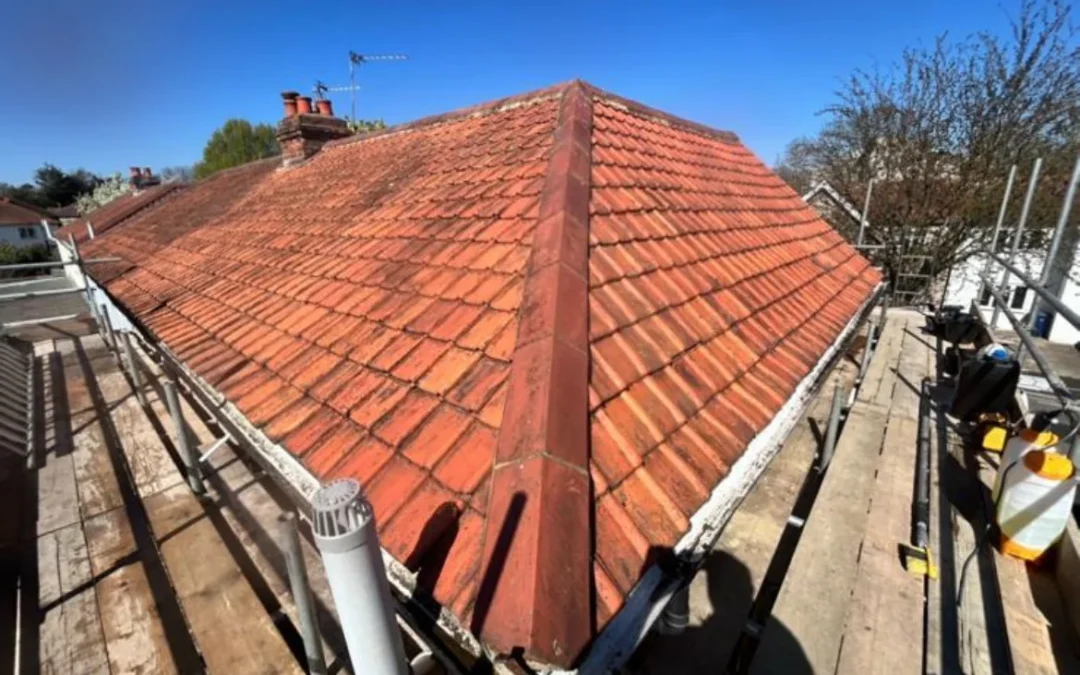
There’s a moment we often encounter on the job, a homeowner standing in their garden, watching one of our team members climb onto their roof, and looking slightly anxious about what might be found up there. It’s a perfectly natural feeling. Not knowing the condition of your roof can be unsettling, particularly if you’ve been noticing a few concerning signs around the property.
What we’ve always found, though, is that the anxiety fades quickly once people understand what a professional roof inspection actually involves. Knowledge replaces uncertainty, and most homeowners tell us afterwards that they feel considerably better having a clear picture of what’s going on, even when it turns out repairs are needed.
Why a Professional Inspection Is Different from a DIY Look
Climbing into the loft with a torch and craning your neck at the underside of the roof deck is not the same as a professional inspection. Experienced roofers know where to look, what patterns of damage indicate deeper problems, and how to read the signs that aren’t immediately obvious. We’ve spotted early-stage structural issues on roofs that looked perfectly fine from the street, and from below, inside the loft.
A professional inspection is also a safety matter. Working at height carries real risks, and without the right equipment, training, and insurance, a DIY inspection attempt can easily become a very different kind of emergency.
What Will Fix It Checks During an Inspection
When we carry out a roof inspection, we work through a structured but thorough assessment covering all the key elements of the roof system.
We begin with the external surface, checking the condition of individual tiles or slates for cracks, chips, lifting, or slippage. We look at the ridge tiles along the apex of the roof, as these are a frequent source of problems and often the first place that weathering becomes apparent. The valleys, the channels where two roof slopes meet, are scrutinised carefully, as these are high-volume water channels where blockages or deterioration can cause significant ingress.
Flashing is another key area of focus. The lead or aluminium flashing around chimneys, skylights, and roof penetrations is designed to create a watertight seal at the junction between the roof covering and vertical surfaces. It’s also one of the most common failure points on a roof, particularly as properties age. We check not only the condition of the flashing material itself but the quality of the seal and whether any sections have lifted, cracked, or begun to pull away.
Guttering and drainage are assessed as part of the inspection too. Blocked or damaged gutters affect the way water exits the roof system, and problems here can feed back into damage to the roof edge and fascias over time.
The Internal Inspection
Where access allows, we also inspect from inside the loft space. This gives us a view of the underside of the roof deck and the condition of the rafters and battens. Signs of water ingress, daylight visible through the roof covering, evidence of mould or rot, and the condition of any felt underlay all become visible from this vantage point.
Some problems are only detectable from inside and this is one of the reasons why a thorough inspection involves more than just an external walkover.
What Happens After the Inspection?
Once we’ve completed our roof assessment, we put together a clear and honest report of our findings. If repairs are needed, we explain exactly what’s involved, why it matters, and what we’d recommend. If the roof is in good shape, we’ll tell you that too, along with any minor maintenance points worth keeping an eye on.
No pressure, no upselling, no alarm tactics. After 25 years in this industry, our reputation is built on honest assessments and quality workmanship, and we intend to keep it that way.
Will Fix It offers a free roof inspection with no obligation attached. Get in touch with our team today to arrange yours.