
Walk down any street in the UK and you’ll see a remarkable variety of roofing materials grey Welsh slate on a Victorian terrace, terracotta clay tiles on a 1930s semi, concrete interlocking tiles on a modern estate, flat rubber membranes over a rear extension. Each of these materials has its own set of strengths, weaknesses, and ideal applications. Understanding the differences is genuinely useful when you’re facing a re-roof decision, and it’s something we enjoy talking through with our customers before any work begins.
Natural Slate: The Premium Choice
Natural slate is arguably the finest roofing material available for pitched roofs. Quarried in Wales, Spain, and a handful of other regions, its incredibly durable Welsh slate in particular has been used on British roofs for centuries and when properly laid, a natural slate roof can last 80–100 years or more. It’s breathable, resistant to frost, and carries a visual character that no artificial alternative quite matches.
The trade-offs are cost and weight. Natural slate is significantly more expensive than concrete tile both in roofing material cost and the additional labour required for a skilled slater to lay it properly. It’s also heavier, so an older roof structure may need to be checked for load-bearing capacity before a slate re-roof is undertaken. Sourcing matching reclaimed slates for a repair can also be challenging and costly.
For period properties, properties in conservation areas, or homeowners who simply want the best possible result and plan to stay long-term, natural slate is hard to beat.
Concrete and Clay Tiles: The UK Standard
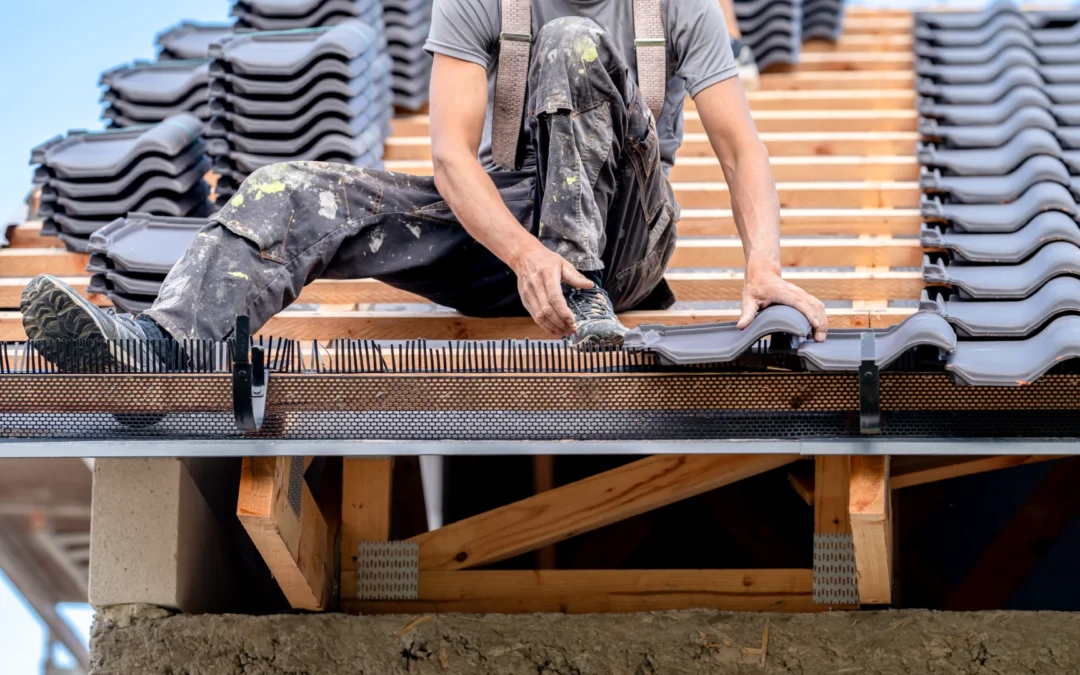
Concrete interlocking tiles are the most widely used roofing material in UK residential construction, and for understandable reasons. They’re affordable, widely available, relatively easy to source matching replacements for, and give a clean, tidy appearance on modern homes. A well-maintained concrete tile roof will typically last 25–40 years.
Clay tiles carry more premium credentials than concrete while remaining more affordable than natural slate. Traditional plain clay tiles are a beautiful choice for older homes and have a long service life of 50–60 years in typical UK conditions. Handmade clay tiles still produced in limited quantities in the UK are the choice for high-end restoration work where authentic character is essential.
Both concrete and clay tiles require sound battens and quality breathable membrane beneath them, and periodic maintenance (particularly moss treatment and pointing of ridge tiles) will significantly extend their service life.
Modern Flat Roof Systems
For any roof below roughly 10–12 degrees of pitch, flat roof systems are the appropriate solution. The three systems we work with most are EPDM rubber, GRP fibreglass, and felt (in its modern form significantly better than old-school bituminous felt).
EPDM (ethylene propylene diene monomer) rubber is our most frequently recommended flat roof material. It comes in large seamless sheets, is highly resistant to UV degradation and extremes of temperature, is lightweight, and is straightforward to repair if damaged. A well-installed EPDM roof carries a genuine 20–25 year lifespan with minimal maintenance.
GRP fibreglass is a rigid, seamless system with excellent load-bearing properties and a very clean, neat finished appearance. It’s our preferred choice for roof terraces and any flat roof that will see regular foot traffic. The installation process is more technical; it involves laying glass fibre matting and applying resin but the result is among the most durable flat roof solutions available.
Modified bitumen felt (torch-on felt) has improved substantially from its 1970s predecessors. Modern torch-on systems using APP or SBS modified bitumen offer good longevity at a competitive price point, making them a sensible choice for straightforward flat roofs where budget is a priority.
Making the Right Choice
The right material for your roof depends on the pitch of your structure, the age and style of your property, your budget, and how long you intend to stay in your home. These factors together usually point clearly toward one or two options, and a knowledgeable roofing contractor will help you narrow it down.
At Will Fix It Home Improvements, we work across all of the systems described here and will always give our honest recommendation based on your specific project. Explore our new roof service here.
Click here to see more: The Complete Guide to Getting a New Roof: Everything UK Homeowners Need to Know