
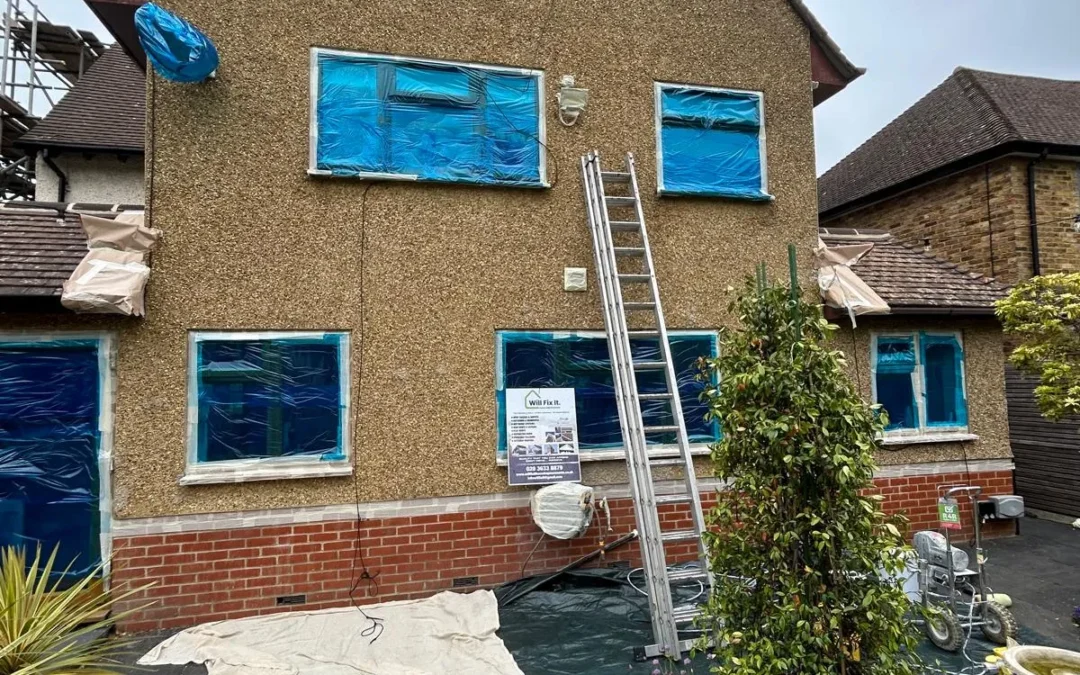
External walls face rain, changing temperatures, and everyday weathering year-round. Choosing the right wall coating can help protect the masonry, improve its appearance and reduce the risk of moisture-related problems. However, not every coating suits every property. Breathable wall coatings allow water vapour to escape from the wall while protecting the surface from rain.
This is particularly important for older properties and buildings constructed with traditional materials, where moisture needs to move through the walls naturally. We share what makes a wall coating breathable, how breathable and non-breathable products differ, and which types are available.
What Does “Breathable” Mean for a Wall Coating?
A breathable wall coating allows water vapour to pass through the coated surface rather than trapping moisture within the wall. This matters because masonry can absorb moisture from rain, the surrounding ground, and internal sources, depending on the property’s construction and condition. As temperatures and humidity levels change, moisture needs a way to escape. If a coating significantly restricts this movement, water can accumulate behind the surface, potentially contributing to dampness, blistering, peeling or deterioration of the underlying material.
Breathability does not mean that a coating allows rainwater to pass freely into the wall. Suitable products can help resist liquid water while still allowing water vapour to escape. The balance between these properties varies between coatings, so check the manufacturer’s specifications. A breathable coating can support moisture management, but it cannot correct every damp problem. Existing leaks, damaged pointing, rising damp and poor drainage may require separate investigation and repairs.
Breathable vs Non-Breathable Coatings: What Goes Wrong
The main difference between breathable and non-breathable coatings is how readily they allow water vapour to pass through the surface. A non-breathable coating can restrict moisture movement, which may cause problems when applied to walls that already contain moisture or need to dry naturally.
When moisture becomes trapped behind a coating, it can contribute to blistering, flaking and peeling. In colder conditions, moisture within the masonry may also freeze and expand, potentially damaging vulnerable surfaces. Salt deposits can cause further deterioration as moisture moves through the wall and evaporates.
These problems are not inevitable with every non-breathable coating. Their likelihood depends on the wall construction, existing moisture levels, weather exposure, and the properties of the product used. Applying another layer of paint over a failing coating may not solve the underlying issue.
The wall may need to be assessed, the source of moisture addressed, and unsuitable material removed before a new finish is applied. Choosing a coating that is compatible with the building helps reduce the risk of these problems developing.
Which Homes Benefit Most From Breathable Wall Coatings?
Breathable wall coatings can be particularly useful for older properties, especially those built with solid walls and traditional materials such as lime mortar. These buildings often rely on moisture moving through the masonry and evaporating from the surface, rather than being managed by modern cavity wall construction. Period cottages, Victorian and Edwardian homes, and properties with solid brick or stone walls may benefit from a coating suited to their original construction. Buildings in exposed locations can also require careful consideration, as wind-driven rain may increase the amount of moisture reaching external walls.
Properties with existing external coatings that are cracking, peeling or trapping moisture may also need a more suitable replacement. However, investigate the cause of any dampness before applying a new product. Not every older home automatically requires a breathable coating, and newer properties can benefit from vapour-permeable finishes too. The best option depends on the wall material, existing finish, condition, and exposure to the weather.
Types of Breathable Wall Coatings
Several types of wall coatings offer different levels of breathability, water resistance and durability. The right choice depends on the property’s construction and the finish required. Common options include silicone-based masonry coatings, mineral and silicate paints, and limewash or clear breathable treatments. Each works differently and suits particular surfaces and conditions.
When comparing products, check their water vapour permeability, rain resistance, compatibility with the existing substrate, and preparation requirements. A coating’s description alone does not guarantee that it is suitable for every wall.
-
Silicone-Based Masonry Coatings
Silicone-based masonry coatings are designed to help repel rainwater while allowing water vapour to escape. This combination makes them suitable for external walls that need weather protection without unnecessarily restricting moisture movement. Performance varies by formulation, so check the manufacturer’s technical information before application.
-
Mineral and Silicate Paints
Mineral and silicate paints are often used on masonry because they can provide a vapour-permeable finish. Silicate paints bond with suitable mineral substrates, making them particularly relevant to certain traditional and mineral-based surfaces. They require compatible backgrounds and careful preparation, so they are not suitable for every previously painted wall.
-
Limewash and Clear Breathable Treatments
Limewash is a traditional finish often used on lime-based plaster, render and masonry. It allows moisture vapour to pass through and creates a natural, matt appearance, although it may require more frequent maintenance than some modern coatings. Clear, breathable treatments can reduce water absorption without significantly changing the surface’s appearance. Their suitability depends on the substrate and the product’s tested properties.
Can a Coating Be Both Breathable and Waterproof?
A coating can resist liquid water while remaining permeable to water vapour. These properties are not necessarily contradictory, as rainwater and water vapour behave differently when they encounter a wall surface. A suitable breathable coating can help prevent rain from soaking into external masonry while allowing moisture vapour within the wall to escape. This can be useful for properties exposed to persistent rainfall, particularly where the wall construction needs to dry naturally.
However, do not treat the terms waterproof and water-resistant as interchangeable. No external coating can compensate for every source of water ingress, and performance depends on the product, application quality, surface preparation and condition of the underlying wall. Before choosing a coating, check its technical specifications for water vapour permeability and resistance to liquid water. It is also important to establish whether the wall has existing dampness or structural defects.
How Will Fix It Applies Breathable Coatings
Applying a breathable wall coating involves more than simply covering the external surface with a new finish. Before work begins, consider the condition of the masonry, the existing coating, and any signs of moisture damage. The first stage is to assess the wall and identify any visible problems, such as peeling paint, damaged render, cracks or areas of deterioration. Where dampness is present, investigate its potential causes so you can identify the appropriate repairs.
Preparation is then carried out based on the surface condition and the requirements of the chosen product. This may involve cleaning the wall, removing loose or unsuitable coatings and repairing damaged areas. The substrate must be suitable for the coating being applied. The coating can then be applied in accordance with the manufacturer’s instructions, including any requirements for coverage, drying times, and weather conditions.
At Will Fix It, we understand the importance of choosing an appropriate wall coating for the property. Selecting a compatible product and preparing the surface properly helps support the coating’s performance and long-term durability.
Looking After Your Coating Over the Years
Regular maintenance can help keep a breathable wall coating in good condition and identify problems before they become more serious. Although a suitable coating can provide lasting protection, its lifespan depends on the product, application quality and exposure to the weather. Inspect the external walls periodically for cracking, peeling, blistering or changes in appearance. Pay particular attention to areas around windows, doors, roof edges and other junctions where water may enter if surrounding materials become damaged.
Keep gutters and downpipes clear, and check that rainwater drains away properly. Overflowing gutters and leaking joints can allow water to run down external walls, increasing moisture exposure and potentially damaging the coating. If you notice damp patches, deteriorating masonry or a coating that is beginning to fail, investigate the cause rather than simply applying another layer of paint. Cleaning and repair methods should also suit the coating and underlying material.
Speak to Will Fix It About Breathable Wall Coatings
If you are considering breathable wall coatings for your property, Will Fix It can help you explore the available options. Our wall coating services are designed to improve and protect external surfaces, with the right treatment depending on the property’s condition and requirements. Whether it’s applying protective coatings to safeguard your walls or addressing existing damp issues, we provide everything from minor repairs to comprehensive damp-proofing solutions, ensuring your home remains dry and secure.
Learn more about the areas we cover with our wall coating services here. Want to find out more about wall coatings for your home? Complete our online quotation form or contact Will Fix It directly to discuss your requirements. You can reach us by calling us on our free phone number: (020) 3633 8879, our mobile: +44 7413 298 516, or by emailing us at infowillfixit@gmail.com. Our team will be happy to hear from you and help you take the next step towards protecting your property’s exterior.