The roofing trade, more than most building trades, has a problem with rogue operators. It’s not hard to understand why roofing work is visually complex enough that most homeowners can’t easily assess the quality of what they’re getting, and by the time problems emerge, the contractor may be long gone. We’ve spent years watching good homeowners get burned by bad decisions, and we feel strongly that better information is the best protection. Here’s what to genuinely look for and what to watch out for.
The Cold-Knock Problem
Storm comes through. Next morning, someone knocks on your door, says they were “working in the area” and noticed a few tiles off, offers to take a look. They go up, come down with photos of “serious damage,” and push for a same-day decision with a cash deposit. This scenario plays out thousands of times every year in the UK, and the results are almost never good.
Legitimate roofing companies do not cold-knock after storms. They don’t need to they have established customer bases, they advertise, they get referrals. If someone knocks your door unsolicited and pressures you toward an immediate decision, the right move is always to decline, no matter how persuasive they are.
Green Flags: What a Trustworthy Roofer Looks Like
Verifiable trade body membership. The National Federation of Roofing Contractors (NFRC) and the Confederation of Roofing Contractors (CORC) are the most recognised in the UK. Check the membership directly on the organisation’s website, don’t just take the contractor’s word for it, or accept a logo on a website as confirmation. Membership means the contractor has met professional standards and that you have a route of recourse if things go wrong.
Public liability insurance. This is non-negotiable. Ask for the certificate and verify it’s current. A roofer without public liability insurance exposes you to significant financial risk if something goes wrong, damage to your property, injury to a third party, or structural failure.
Established local presence. A company with a local address, local reviews, and several years of trading history in your area has a reputation to protect. They’re not going to disappear. Check Google reviews, Checkatrade, Trustpilot, or the Federation of Master Builders if they’re members. Look at how they respond to negative reviews. A professional response to criticism tells you a lot.
Written, itemised quotes. A legitimate contractor will give you a written quote that breaks down materials, labour, scaffold, disposal, and VAT. Vague single-figure quotes “£4,000 all in” make it impossible to assess what you’re actually getting or to compare fairly with other quotes.
No large upfront cash demands. A reasonable deposit typically 10–25% to cover initial material ordering is standard practice for larger jobs. A demand for 50% or more upfront, particularly in cash, should give you pause. For smaller repair jobs, payment on completion is often the norm.
Red Flags to Walk Away From
Beyond the cold-knock, there are other patterns worth watching for. Reluctance to provide written documentation quote, contract, guarantee is a significant warning sign. Workmanship guarantees are standard in the industry; a refusal to provide one in writing suggests a lack of confidence in the work.
An insistence on cash payment only is another red flag. It’s not inherently wrong to pay a sole trader in cash, but it should be accompanied by a proper receipt, and VAT-registered businesses should be invoicing you regardless of payment method.
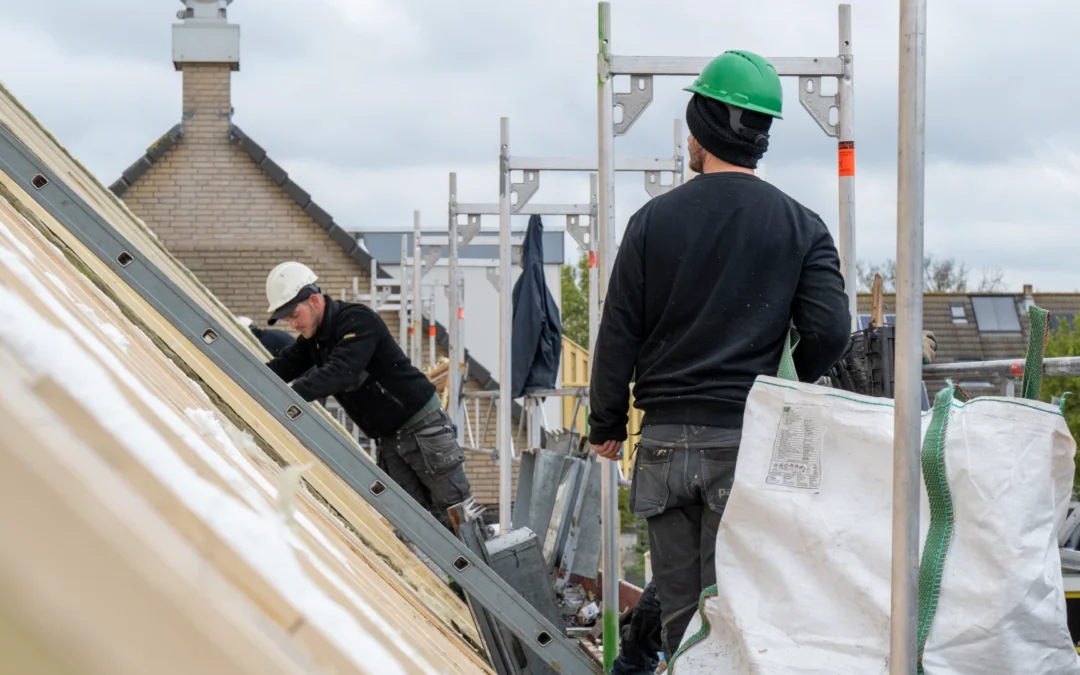
Check their vehicles and equipment too. Reputable roofing companies invest in their kit. A van with the company branding, a proper scaffold contract (scaffolding is usually subcontracted even by large roofing companies), and appropriate PPE on the workers are all basic indicators of a professional operation.
Our Approach at Will Fix It Home Improvements
We’re a local, independent roofing company. Every quote we provide is written, itemised, and pressure-free. We carry full public liability insurance, we work with quality materials, and we stand behind every installation with a written workmanship guarantee. We don’t cold-knock, we don’t demand large cash deposits, and we don’t disappear when a job is done.
If you’d like to know more or arrange a free survey, you can reach us through our new roof service here.
Click here to see more: The Complete Guide to Getting a New Roof: Everything UK Homeowners Need to Know