
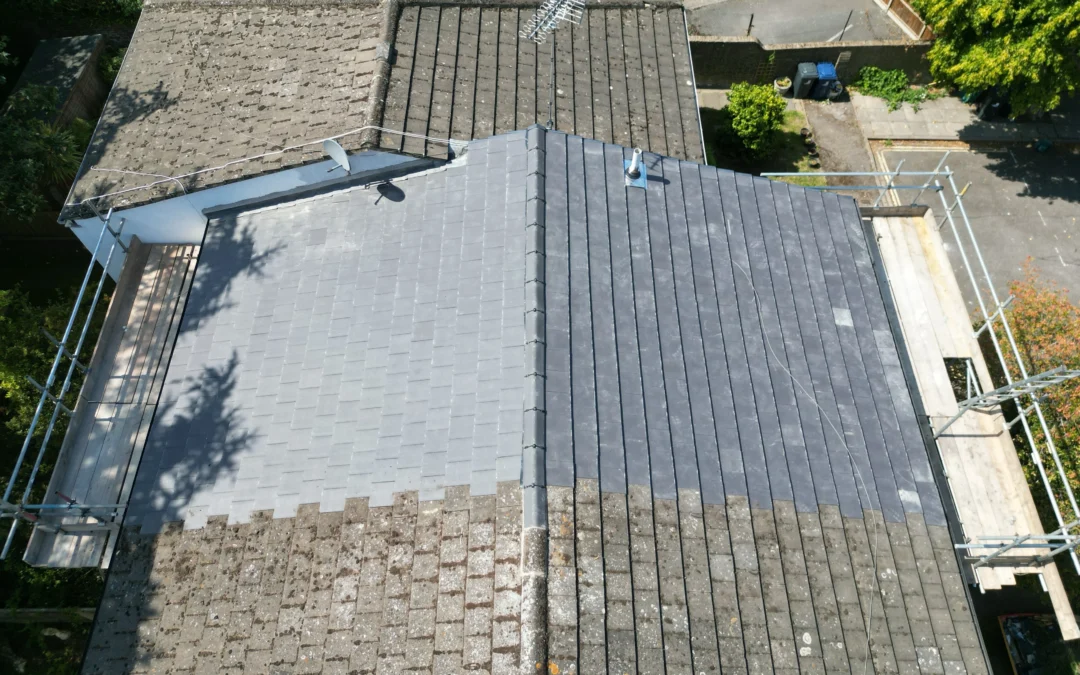
This is genuinely one of the most important questions to get right before spending any money on roof work, and it is one we take seriously at Will Fix It. The truth is that roof coatings are an excellent solution for a wide range of roofs, but they are not right for every situation. Understanding the difference can save you a significant amount of money and frustration.
Roof Types That Respond Well to Coatings
The range of roof types that can be successfully coated is broader than many homeowners realise. Felt roofs, modified bitumen systems, metal roofing, GRP or fibreglass roofs, single-ply membranes, and built-up roofing systems are all common candidates. In practical terms, the vast majority of flat and low-pitch roofs on UK residential properties fall into one of these categories. Extensions, garages, bay windows, outbuildings and porches are all surfaces we coat regularly and successfully.
Pitched roofs can also benefit from coating in certain circumstances, particularly older properties where the tiles themselves are porous or where the surface has deteriorated. That said, the most common and most impactful application in the UK is flat and low-pitch roofing, where the waterproofing challenge is greatest.
Warning Signs That Your Roof Needs Attention
Spotting the right moment to act matters enormously. Coat a roof too early and you are spending money unnecessarily. Leave it too long and the window for a coating closes, leaving replacement as the only option.
The signs we tell homeowners to watch for include surface cracking and crazing on felt or bitumen roofs, which indicates the material is drying out and losing flexibility. Visible moss or algae growth is another indicator, not just of appearance issues but of moisture retention that is actively degrading the surface. Blistering, where air or moisture pockets form beneath the roof surface, tells you that adhesion between layers is starting to fail. And of course, any evidence of water ingress inside the property, damp patches on ceilings or walls near roof junctions, is a clear signal that something needs to be done.
The earlier you act on these signs, the more options you have. A coating applied to a roof that is showing early wear is a very different proposition from one applied to a roof that has been leaking for two years.
When a Coating Is Not the Answer
Being honest about this is something we consider important. A coating will not fix a roof with structural problems beneath the surface. If the timber decking underneath the felt or membrane has rotted due to long-term water ingress, the surface above it will not be stable enough to accept a coating correctly. Similarly, if insulation has been saturated over a prolonged period, the moisture trapped below the surface will cause ongoing problems regardless of what is applied on top.
Roofs that have failed at a structural level, where water has been penetrating for years rather than months, typically need replacement rather than coating. It is not a question of willingness to use the more cost-effective solution. It is simply a question of what is physically possible.
The Value of a Professional Assessment
What we have described above might sound straightforward on paper, but in practice the condition of a roof is not always obvious from the outside. A surface that looks cosmetically rough can turn out to have a perfectly sound substrate underneath. Equally, a roof that looks fairly presentable can have underlying problems that only become apparent on closer inspection.
At Will Fix It, every roof we’re asked to coat gets a proper survey before we quote. We check the substrate, probe any areas of concern, assess drainage, and give the customer a clear, honest view of what we find. If a coating is the right answer, we’ll explain exactly why and what we’d recommend. If it isn’t, we’ll tell them that too, with a clear explanation of what the alternatives look like.
If you are trying to work out whether your roof is a candidate for roof coating, get in touch with Will Fix It today. We offer free surveys with no obligation to proceed.