
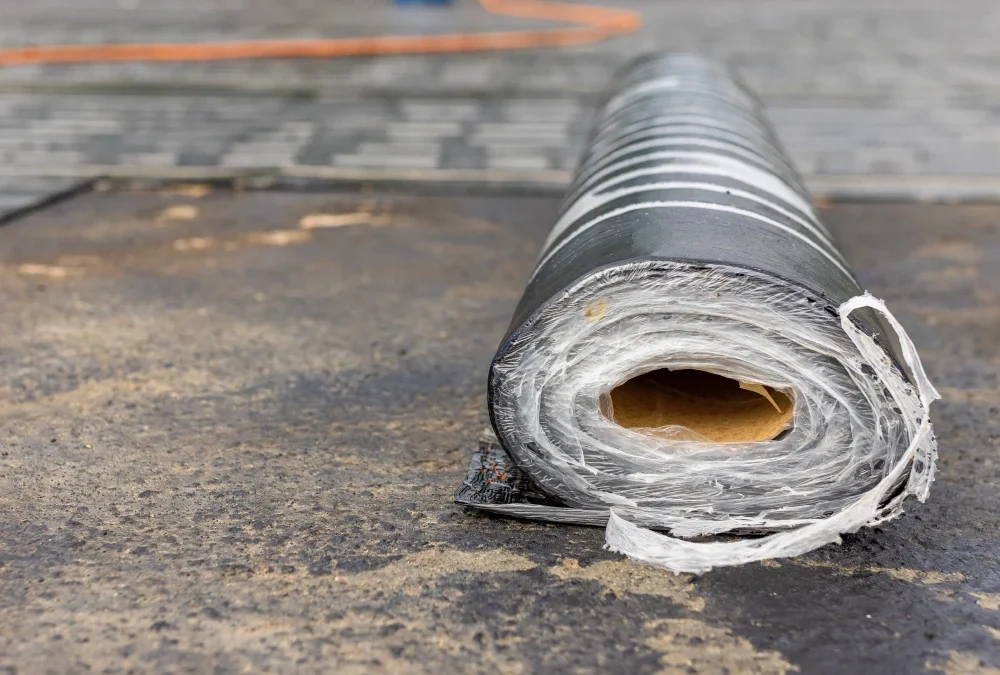
There is a lot of confusion around roof coatings, and honestly, that confusion is understandable. The term gets used loosely, it sometimes gets lumped in with roof paint, and plenty of homeowners come to us having heard conflicting things from different contractors. So let’s clear it up properly.
A roof coating is a liquid-applied protective system that is spread directly onto an existing roof surface. Once it cures, it forms a continuous, flexible, waterproof membrane across the entire roof. Unlike a roof replacement, which involves stripping everything back and starting from scratch, a coating works with what’s already there, bonding to the substrate and sealing it from the outside in.
The key thing that makes a quality roof coating different from simply painting your roof is its elastomeric nature. Elastomeric means it can stretch and return to its original shape without cracking. In practice, this matters because roofs are constantly moving. Temperature changes cause materials to expand and contract, and a rigid coating would crack under that stress over time. A properly formulated roof coating moves with the roof, which is a big part of why it lasts as long as it does.
How It Bonds to the Roof Surface
When we apply a coating to a roof at Will Fix It, the preparation stage is where the real work happens. The coating needs a clean, sound surface to bond to. Any loose material, moss, algae, or contamination has to come off first, because a coating applied over a compromised surface simply will not adhere correctly. We’ve seen DIY coating jobs fail within a year because the surface wasn’t properly prepared beforehand, and it’s a frustrating outcome that’s entirely avoidable.
After cleaning, most coating systems require a primer coat. This opens up the surface at a microscopic level, improving adhesion and ensuring the coating bonds evenly rather than sitting on top in some areas and bonding well in others. Once the primer has cured, the coating goes on in one or two passes depending on the product and the condition of the roof.
The result is a seamless, joint-free membrane. That seamlessness is actually one of the coating’s greatest strengths. Traditional roofing systems rely on joins, laps, and seams to cover a surface, and those junctions are almost always the first points of failure as the roof ages. A coating eliminates that weakness entirely by covering the whole surface in one continuous layer.
What Roof Types Can Be Coated?
One of the questions we’re asked most often is whether a particular roof type is suitable. The good news is that coatings work on a wide range of common substrates. Felt roofs, modified bitumen, metal roofing, GRP (fibreglass), single-ply membranes, and built-up roofing systems are all candidates for coating. Most flat and low-pitch roofs on UK extensions, garages, bay windows, and outbuildings fall into one of these categories.
What a coating cannot do is rescue a roof with deep structural problems. If the decking beneath the surface has rotted, if the insulation has been saturated by years of water ingress, or if the roof has genuinely reached the end of its life, a coating applied over the top is not going to resolve the underlying problem. Part of what we do at Will Fix It when we survey a roof is make that honest assessment. Sometimes the right advice is a replacement, and we’ll always say so clearly.
The Difference Between a Coating and Roof Paint
It’s worth spending a moment on this because the two products look similar but perform very differently. Roof paint is typically a surface-level product. It can improve appearance and offer a degree of weather resistance, but it doesn’t bond deeply to the substrate and it isn’t designed for long-term waterproofing performance. Flaking, peeling, and early degradation are common complaints with painted roofs.
A roof coating is a structural solution. It’s thicker, it penetrates the substrate, it bonds chemically, and it’s engineered specifically to withstand UV exposure, thermal movement, and prolonged contact with water. The performance gap between the two is significant, and it’s reflected in the warranty periods that quality coating manufacturers are willing to offer.
Why It Makes Financial Sense
The comparison that tends to resonate most with homeowners is the cost difference between a coating and a full replacement. A full flat roof replacement can cost considerably more per square metre than a professional coating system, and it involves a level of disruption that a coating job simply doesn’t. When the structure of the roof is sound and the problems are surface-level, a coating can add ten or more years to the life of that roof at a fraction of the replacement cost.
We’ve worked on roofs that clients assumed were at end of life, only to find that the underlying structure was perfectly solid and a coating was absolutely the right call. Those jobs are genuinely satisfying because the customer gets a result they weren’t expecting for a price that doesn’t hurt.
If you’d like to understand whether your roof is a candidate for coating, the best starting point is a survey. We’ll give you a straightforward, honest assessment with no pressure to proceed.
Learn more about our roof coating service and get in touch to book your free survey at Will Fix It Home Improvements.