
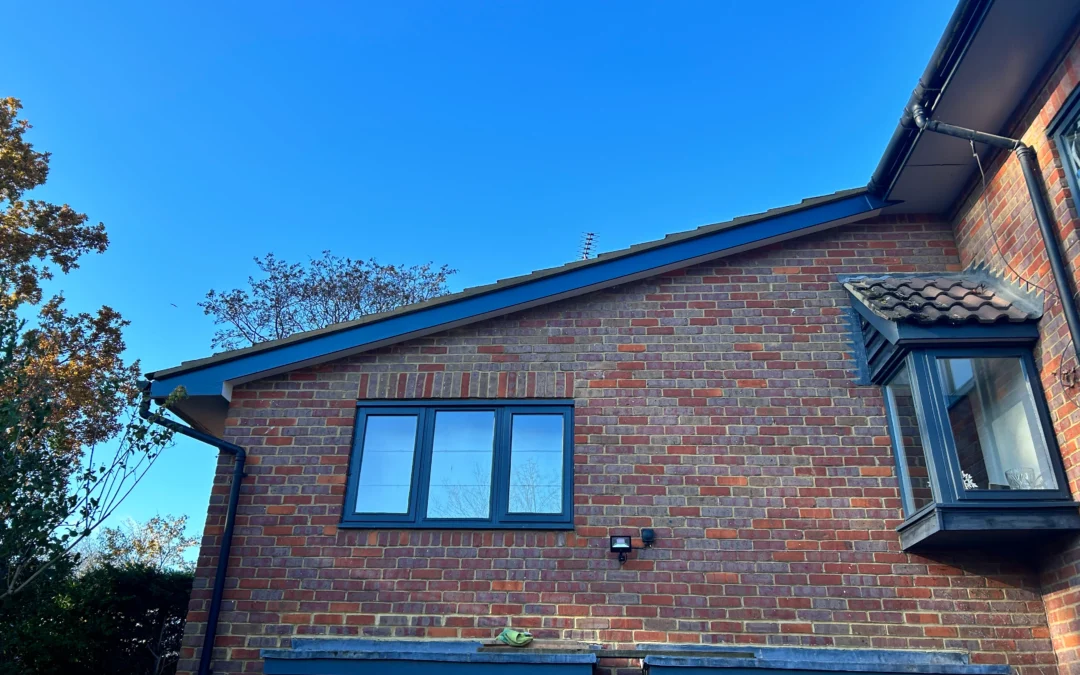
Of all the home improvement problems we’re asked to help with, damp is one of the most stubborn and stressful. It can be difficult to trace, it spreads quietly, and by the time it shows up as a visible stain on a wall or ceiling, the moisture has usually been present for some time. What surprises many homeowners is how often the source of internal damp turns out to be the roofline, specifically the fascias and soffits.
The Chain of Events
It starts, typically, with a small failure in the roofline. A joint that’s worked loose. A timber board that’s cracked. A stretch of fascia where the paint has lifted and moisture has found its way behind. On its own, any one of these is a manageable problem. Left unaddressed, though, each one creates an entry point for water.
When rainwater gets behind the fascia, it doesn’t have anywhere obvious to go. It runs along the rafter feet and the wall plate, soaks into the masonry, and begins to work its way through the fabric of the building. This process is slow enough that you might not notice anything for months or even years, until the internal symptoms start to appear.
What the Internal Signs Look Like
The most common internal symptoms of roofline-related damp are staining and discolouration on upper walls or ceilings, particularly in the corners where the wall meets the ceiling, the exact point where water tracking along the roof structure would come to rest. Mould in these areas is another indicator, as is a persistent musty smell in upstairs rooms or in the loft. In more serious cases, you might see plaster that’s crumbling or bubbling, or wallpaper that’s lifting despite no obvious external cause.
The problem with this kind of damp is that it often gets misdiagnosed. Homeowners (and sometimes less experienced tradespeople) assume it must be coming through the roof, and they focus on the tiles or flashing, only to find everything looks fine. The actual source, tucked up in the eaves, gets missed.
The Role of Guttering Overflow
There’s a related issue that’s worth mentioning here. Blocked or overflowing gutters are one of the most common causes of wall damp, and the gutters are attached to the fascia. When a fascia deteriorates, the guttering pulls slightly away from the wall and its alignment changes. Water that should be channelled into the gutter starts to overshoot or overflow, running directly down the face of the wall.
Over time, this persistent wetting of the wall, particularly on older properties with solid masonry, can lead to penetrating damp that shows up inside. It’s one of those problems where the visible symptom (damp wall) is quite far from the actual cause (failing fascia pulling the guttering out of alignment), which is why it’s so easy to treat the wrong thing.
Preventing the Problem
The most effective way to prevent roofline-related damp is to stay on top of your fascias, soffits, and guttering. A visual check twice a year, spring and autumn, is usually enough to catch early problems before they develop into anything more serious. Pay particular attention after heavy storms, which can shift joints and dislodge fixings.
When a roofline replacement is done properly, it creates a sealed, weathertight barrier that should protect your home for 25 years or more without any meaningful maintenance. The investment in getting it done right is far smaller than the cost of dealing with extensive internal damp, which can involve plasterwork, damp-proofing, and redecoration on top of the roofline repair itself.
If you have any concerns about your fascias or soffits, or if you’re seeing internal damp and wondering whether your roofline could be involved, we’re happy to take a look. Find out more at our fascias and soffits service page.