
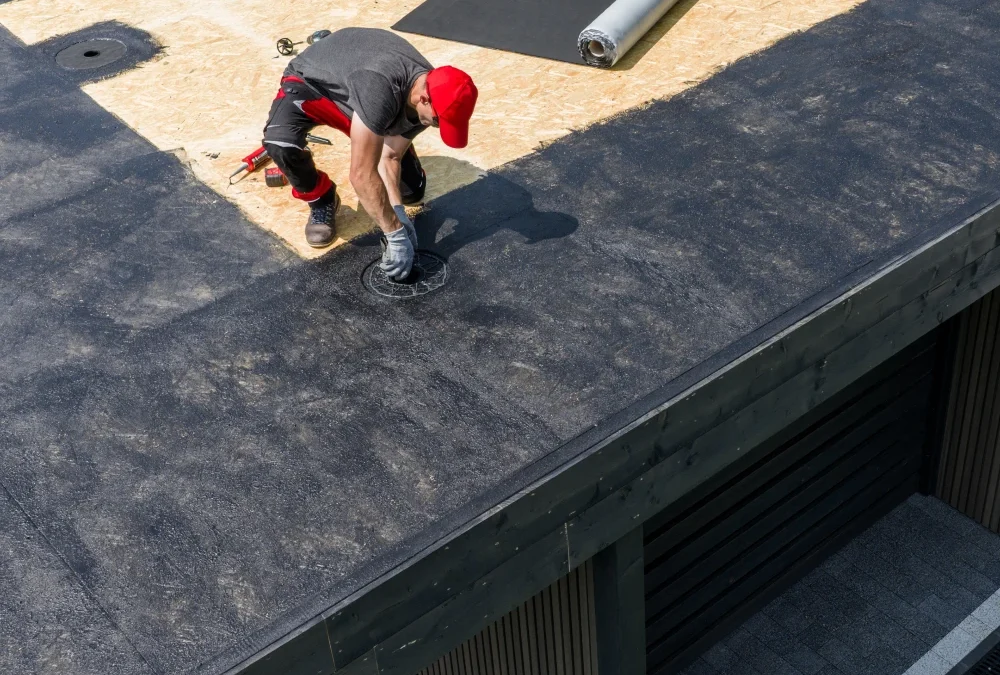
If you’ve noticed your flat roof starting to look a little tired, maybe some hairline cracks have appeared, the felt has started to dry out, or you’ve spotted a damp patch on the ceiling after heavy rain, you’re not alone. It’s one of the most common calls we receive at Will Fix It Home Improvements, and more often than not, the solution doesn’t involve ripping the whole roof off and starting again.
Roof coatings have quietly become one of the most cost-effective and practical ways to extend the life of a roof, and in the UK’s notoriously wet climate, they’re worth understanding properly before you make any decisions. This guide covers everything from what a roof coating actually is, to how much it costs, how long it lasts, and how to know whether your roof is a good candidate for one.
What Exactly Is a Roof Coating?
At its simplest, a roof coating is a liquid-applied protective layer that bonds directly to your existing roof surface. Once cured, it forms a seamless, flexible, waterproof membrane that covers the entire roof, sealing cracks, joints, and weak spots in the process.
It’s worth making the distinction early: a roof coating is not the same as roof paint. Paint sits on the surface and can flake, peel, and degrade relatively quickly. A quality roof coating, by contrast, penetrates and bonds with the substrate, becoming part of the roof itself. It’s also elastomeric, meaning it can expand and contract as temperatures change without cracking, which matters a great deal in a country where you can experience four seasons in a single afternoon.
We’ve applied roof coatings to everything from Victorian terraced house extensions to modern single-storey flat roofs, and the transformation in terms of waterproofing performance is consistently impressive.
The Different Types of Roof Coatings
Not all coatings are created equal. Choosing the right type for your roof is arguably the most important decision in the whole process, and it’s one of the areas where professional guidance pays off.
Silicone coatings are widely regarded as the best all-round option for the UK climate. They handle ponding water exceptionally well, something that’s a real issue on flat roofs where drainage isn’t perfect and they’re highly resistant to UV degradation. You can realistically expect a silicone coating to last 15 to 20 years when properly applied, which puts it ahead of most alternatives in terms of value over time.
Acrylic coatings tend to be the more budget-friendly choice. They perform well in terms of UV resistance and are relatively easy to apply, but they’re not well-suited to areas of standing water. In a dry summer, they’re great. After a week of October rain, less so. Lifespan typically sits somewhere between seven and ten years depending on conditions and maintenance.
Polyurethane coatings are the option we’d point you towards if your roof sees regular foot traffic, a flat roof terrace, for example, or a roof above a commercial unit. They’re the most mechanically durable of the three, resistant to impact and abrasion, and tend to last ten to fifteen years. The trade-off is a higher upfront cost, but for the right application, it’s absolutely worth it.
There are also modified bitumen and liquid rubber options that work well on traditional felt roofs, something we see a lot of in older UK properties where the original felt has started to fail.
Why Bother? The Real Benefits of Roof Coatings
Some homeowners approach us a little sceptical they’ve been told by other contractors that they need a full replacement, and the idea that a coating could solve their problem sounds too good to be true. In the right circumstances, though, it genuinely isn’t.
The most obvious benefit is waterproofing. A well-applied coating seals the entire roof surface, including the seams and joints that are typically the first points of failure on ageing flat roofs. But the advantages go further than that.
Energy efficiency is something that often surprises people. Reflective coatings, particularly lighter-coloured silicone products, can reflect a significant proportion of solar heat away from the building, reducing how hard your heating and cooling systems need to work. Over a year, that adds up.
Then there’s longevity. Adding a quality roof coating to a roof that’s structurally sound but showing surface wear can add a decade or more to its lifespan. Compare that to the cost and disruption of a full replacement, and the value becomes pretty clear. We’ve worked on roofs that our clients assumed were a write-off, and after proper preparation and the right coating, they’ve gone on to last years without a single issue.
There’s also an environmental argument worth making. Roof replacements generate a lot of waste, old felt, membranes, insulation boards. Extending a roof’s life with a coating keeps all of that out of landfill. It’s a small thing, but it’s worth noting.
Is Your Roof Actually Suitable?
This is where honesty matters, and it’s something we’re upfront about with every customer we speak to. Roof coatings are genuinely excellent but they’re not a universal fix.
The good news is that coatings work on a wide range of common roof types. Felt roofs, modified bitumen, metal roofing, GRP (fibreglass), single-ply membranes, and built-up roofing systems are all candidates. In practical terms, most of the flat and low-pitch roofs you’ll encounter on UK extensions, garages, bay windows, and outbuildings fall into one of these categories.
Where a coating is not the right answer is when the roof has underlying structural problems. If there’s significant decking rot beneath the surface, if the insulation has been compromised by long-term water ingress, or if the roof has genuinely reached the end of its serviceable life, putting a coating over it is the wrong move, you’d be spending money on something that won’t hold. Part of what we do when we survey a roof is make that honest assessment. Sometimes we walk away from a job and tell a customer they need a replacement, because that’s the right advice.
How the Application Process Works
From the outside, a roof coating job might look straightforward, a team turns up, applies some product, and leaves. The reality is that the preparation stage is what determines whether the coating lasts five years or fifteen.
When we arrive to coat a roof, the first thing that happens is a thorough inspection. We’re checking the substrate for damage, identifying any areas that need repair before coating, looking at drainage points, and assessing the overall condition of the surface. Any repairs, crack filling, resealing joints, patching damaged areas, are done at this stage.
Cleaning comes next, and it matters more than most people realise. Moss, algae, loose material, and contaminants all need to be removed. A coating applied over a dirty or compromised surface simply won’t bond correctly, and the whole job is undermined before it’s begun. Pressure washing and biocide treatment are standard parts of our process.
Priming follows for most coating systems, it improves adhesion and ensures the coating bonds evenly to the substrate. Then comes the coating itself, applied in one or two passes depending on the product specification and the condition of the roof. Curing time varies by product and weather conditions, but most systems are touch-dry within a few hours and fully cured within 24 to 48 hours.
The whole process on a standard residential flat roof typically takes one to two days, depending on size and complexity. Homeowners don’t need to vacate the property, and in most cases, day-to-day life is barely disrupted.
How Long Will It Last?
Longevity depends on three things: the quality of the product, the quality of the installation, and how well the roof is maintained afterwards.
As a rough guide, acrylic coatings typically offer seven to ten years of effective protection. Polyurethane systems tend to sit in the ten to fifteen year range. Silicone coatings, our most commonly recommended product for UK flat roofs, can realistically last fifteen to twenty years when applied correctly to a suitable substrate.
Those numbers assume the coating is professionally applied and the roof is given at least basic maintenance in the intervening years. Keeping drainage clear, clearing leaf litter and debris, and having the roof checked every year or two will make a meaningful difference to how long the coating performs. The single biggest enemy of any roof coating is neglected drainage causing prolonged standing water, ironic, given that waterproofing is the whole point.
We always tell customers to think of a roof coating like a good pair of boots. Look after them and they’ll last years. Ignore them and they’ll fail before their time.
What Does It Cost in the UK?
Cost is inevitably one of the first questions we’re asked, and it’s a fair one. Roof coating prices in the UK vary depending on the size of the roof, its current condition, the type of coating being used, and access requirements.
As a general guide, you might expect to pay anywhere from £70 to £120 per square metre for a professionally applied roof coating system in the UK, inclusive of labour, materials, and preparation. Larger roofs often attract a lower per-m² rate. Roofs that need significant repair work prior to coating will sit at the higher end of that range.
Even at the higher end, those figures compare very favourably to the cost of a full flat roof replacement, which can run from £150 to £250+ per square metre depending on the system being installed. When the underlying structure is sound, a coating is frequently the smarter financial decision by a significant margin.
The important caveat is that accurate pricing requires a physical survey. Roof coatings are one of those areas where online estimates can be quite misleading, every roof is different, and the preparation required varies enormously. We always provide written, itemised quotes following a survey, so there are no surprises on the day.
A Special Note on Flat Roofs
Flat roofs deserve a section of their own, because they’re the most common application for roof coatings and the most common source of roof-related headaches for UK homeowners.
The fundamental challenge with flat roofs is water management. Unlike a pitched roof where gravity does most of the work, a flat roof relies entirely on proper drainage to move water off the surface. Over time, as the roofing material ages, minor dips and depressions form and those are the spots where water sits. Prolonged standing water is the enemy of felt and most traditional flat roof materials.
Silicone coatings are particularly well-suited to this challenge because they maintain their integrity even in prolonged contact with standing water. They don’t absorb moisture, they don’t degrade in wet conditions the way acrylic coatings can, and they form a seamless barrier across the entire surface rather than relying on joins or laps that can fail over time.
Whether it’s a garage roof, a kitchen extension, a bay window flat roof, or a larger outbuilding, we see flat roofs in all conditions. The ones that have been neglected longest are often the most satisfying to bring back a surface that was letting water in within days of heavy rain, fully waterproofed and protected for years to come.
Choosing the Right Contractor
Even the best coating product will underperform if the application is poor. The UK roofing industry, unfortunately, has its share of contractors who take shortcuts and a roof is not the place to find that out.
There are a few things worth verifying before you commit to anyone. First, public liability insurance is non-negotiable, ask to see it. Second, check whether they’re accredited by any relevant trade bodies or manufacturer certification schemes, as some coating systems require installer training to validate the warranty. Third, look at reviews, not just the star rating, but what people specifically say about communication, workmanship, and how issues were handled.
Written quotes matter too. A roofing contractor who quotes verbally and won’t put it in writing is a red flag. You want a clear breakdown of what’s included, what product is being used, and what the warranty on the workmanship is.
Coating vs Full Replacement: Making the Call
The question we’re probably asked more than any other is: should I get a coating or a new roof? The honest answer depends entirely on the condition of your existing roof.
If the structure is sound, the decking is solid, the insulation isn’t waterlogged, and the problems are surface-level, a coating is almost always the better choice. It’s faster, less disruptive, significantly cheaper, and when done properly, it delivers years of reliable performance. If the roof has deep-seated structural issues, water has been sitting in the insulation for years, or the substrate is beyond saving, then a replacement is unavoidable and the right thing to do.
The grey area in the middle is where a professional assessment is genuinely invaluable. We’ve surveyed roofs that looked like they needed full replacement and turned out to be excellent candidates for coating and we’ve surveyed roofs that looked cosmetically rough but had problems underneath that a coating couldn’t fix. There’s no substitute for having someone who knows what they’re looking at get up there and give you an honest opinion.
Why Will Fix It?
We’ve been working on roofs across the region for years, and roof coatings have become one of the services we’re most proud of delivering. The combination of the right products, proper preparation, and honest advice consistently produces results that our customers are happy with roofs that stay dry, bills that don’t spike, and jobs that are done without fuss or unnecessary upselling.
If you’re trying to decide whether a roof coating is the right solution for your property, the best place to start is a survey. We’ll come out, have an honest look, and give you a clear, written assessment of what we think the best course of action is, with no obligation to proceed.
Find out more about our professional roof coating service at Will Fix It Home Improvements. Get in touch today to book your free roof survey.